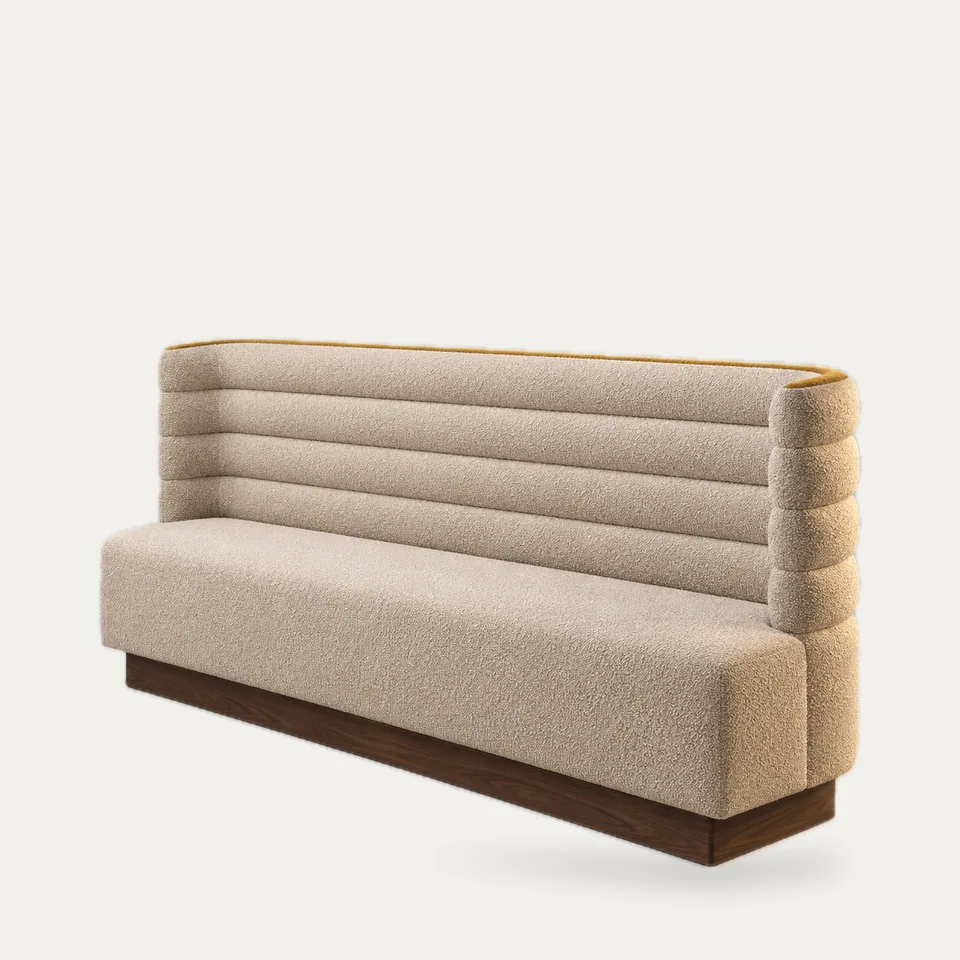
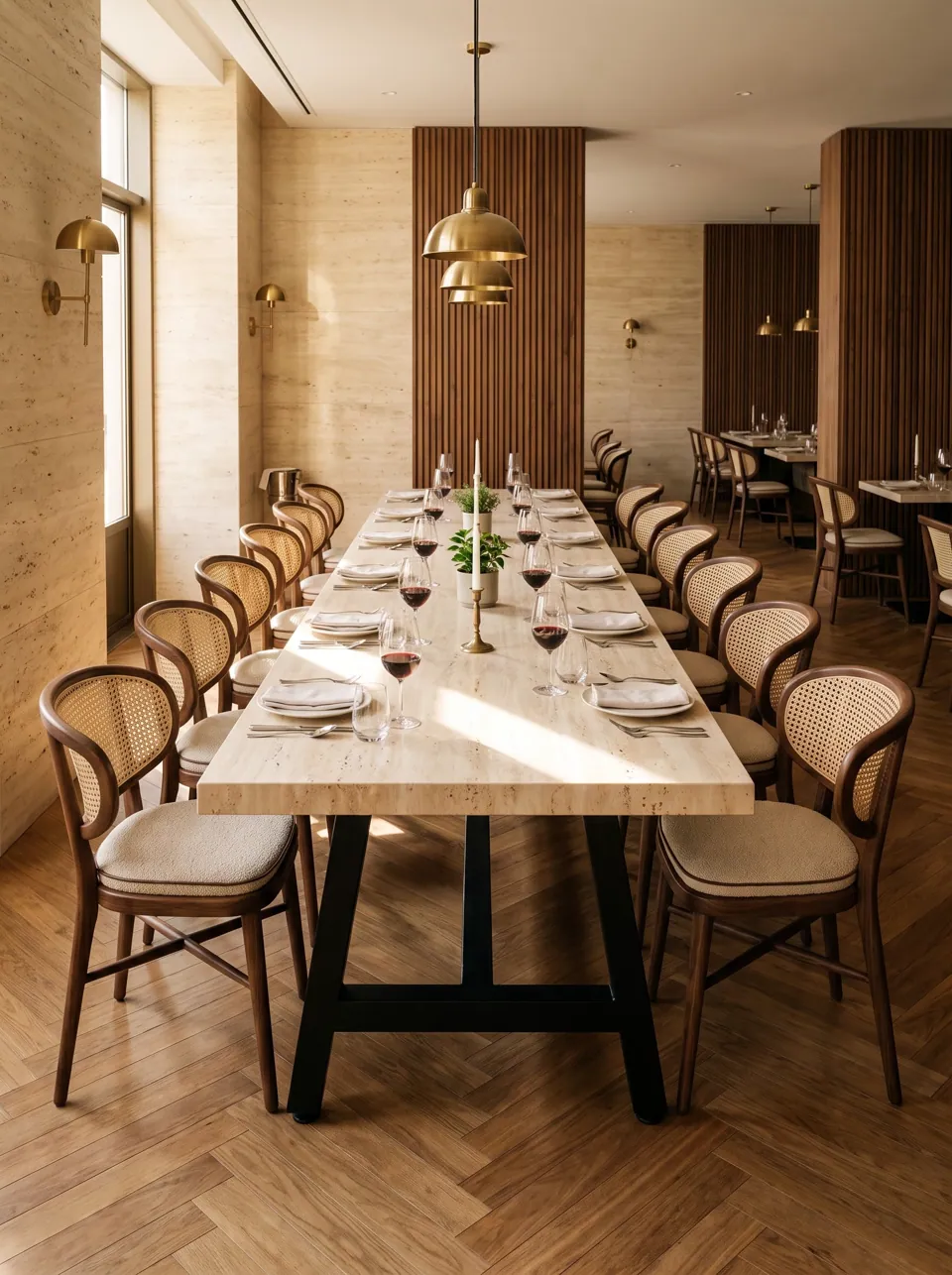
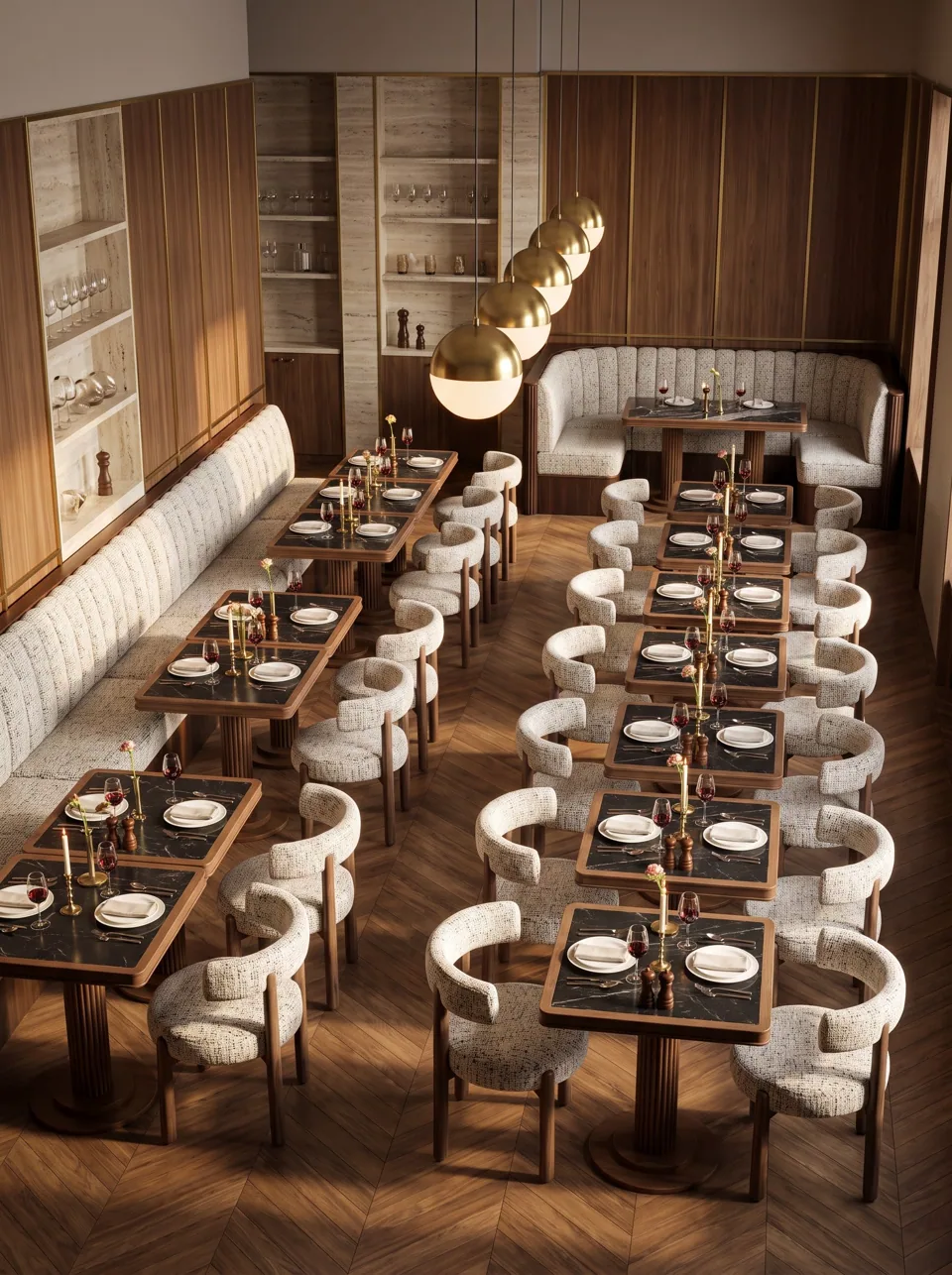
Delivering Bespoke Banquettes to the UK: Lead Times, Protective Packing and Post-Brexit Import
How couture banquettes travel from Foshan to a UK dining room: lead times, protecting velvet and brass in transit, EORI, import VAT and customs agents.
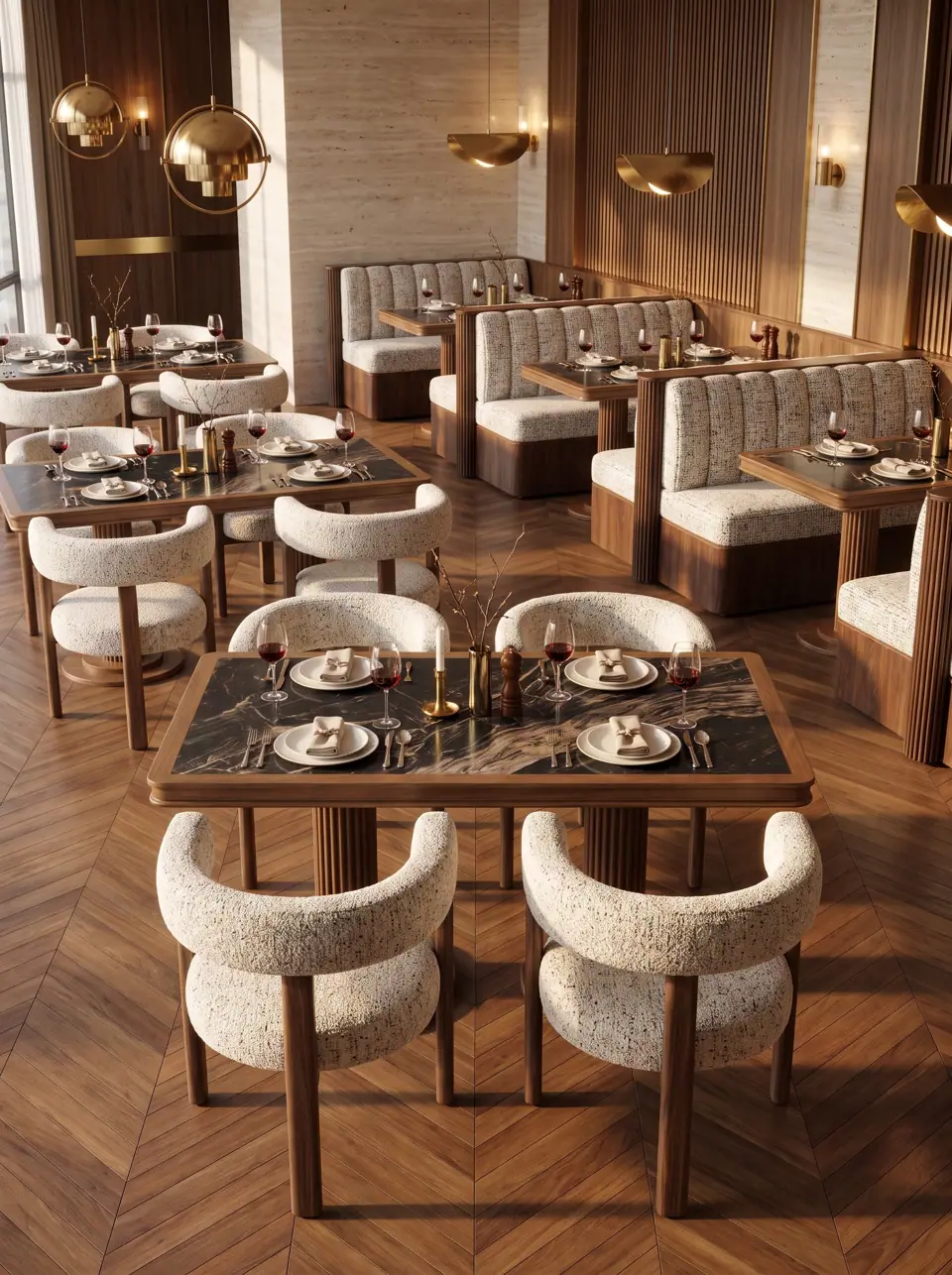
Short answer: A bespoke banquette is typically made in 30-45 days for standard designs and 45-60 days for custom work once drawings and the sample are approved, followed by sea freight and customs clearance; the schedule for your dining room is confirmed in the quote. What makes the journey safe is packing designed for the materials: velvet must not be crushed, leather must not be pressed against itself, and brass must arrive without a fingerprint. In the UK, you will also need an EORI number and a customs agent to bring it through the border.
Maison Banquette (a line by EASEN Commercial Furniture) drafts and makes couture banquettes, booths and dining chairs in our own workshop base in Lecong, Foshan, China, and ships direct to the restaurant. We quote FOB, CIF or DDP on request. This guide sets out what happens between the final drawing and the first service. It is general information rather than customs advice; your agent is the authority on declarations and duty.
When does the making begin?
The making begins when the drawing is signed and the sample is approved, and not a day before. For a fine-dining room that usually means:
- Survey and drawing. Your measured plan, with wall irregularities, skirting, radiators and column positions noted, becomes a dimensioned shop drawing.
- Profile and detail. Back height, seat depth, channel width, piping, end cap and plinth agreed on paper.
- Materials. Velvet, leather or mohair chosen, or customer's own material (COM/COL) dispatched to the workshop.
- Sample. A section of back with the chosen channel and fabric, or a full end cap, sent for approval where requested.
- Making. Frames, foam, upholstery and metalwork: typically 30-45 days for standard designs, 45-60 days for custom work.
- Inspection, packing and despatch.
Most delays are in steps three and four. A COM velvet arriving late, or a second round of sample adjustments, moves the whole schedule. If your opening is fixed, approve the profile first and choose colour while the frame drawings are being finalised.
How is couture upholstery protected at sea?
Couture details are precisely the ones most easily spoilt in transit. Each material is packed on its own terms:
| Material or detail | Risk in transit | How we pack it |
|---|---|---|
| Velvet and mohair | Pile crushing, pressure marks | Breathable wrap, foam spacers so nothing rests on the pile, no tight strapping across the face |
| Leather | Scuffing, sticking to plastic in heat, pressure creases | Acid-free tissue or breathable wrap, then foam; never sealed airtight against the hide |
| Channel and biscuit tufting | Flattened channels | Backs packed upright where possible, with spacers in front |
| Brass trims, foot rails, inlays | Scratches, tarnish, fingerprints | Protective film, then foam and edge guards; handled with gloves at packing |
| Lacquered or veneered plinths | Corner chips | Corner caps and full-edge protection |
| Curved sections | Racking and twisting | Crated or braced to the curve |
Long runs, such as a Floating Brass-Panel Banquette, are divided into sections planned at the drawing stage so that joins fall at channel lines and each section passes through your doors and stairwell. A curved Salon Horseshoe Booth arrives in segments that are bolted together on site.
Full container or shared?
| Shared (LCL) | Full container (20ft, 40ft, 40ft high cube) | |
|---|---|---|
| Suits | A sample, a pair of chairs, a single banquette | A complete dining room or several rooms |
| Handling | Unloaded and reloaded at consolidation warehouses | Sealed at our workshop, opened at your end |
| Risk to velvet and brass | Higher; packing must be heavier | Lower |
For a whole room, a full container is the gentler journey. We prepare a packing list with crate sizes in advance so you can judge which container suits.
What does UK import look like after Brexit?
Great Britain has its own customs regime, and goods from China are imported in the ordinary way through a customs agent or freight forwarder.
- EORI number. Your business needs a GB EORI number before goods arrive. It is quick to obtain but cannot be done at the quayside.
- Customs agent. Your agent lodges the import declaration, classifies the goods (seating sits within tariff chapter 94) and pays duty on your behalf.
- Import VAT and duty. HMRC charges import VAT, and any customs duty that applies, when the goods are cleared. VAT-registered businesses can usually use postponed VAT accounting rather than paying import VAT at the border; your accountant will advise.
- Packaging rules. Timber crates and pallets must be ISPM-15 treated and marked.
- Fire safety. Upholstered contract seating in UK restaurants is usually specified to BS 7176 at medium hazard, with fabrics and fillings tested to BS 5852. We specify foams and fabrics to meet this on request and supply test reports for the specific item where available; your fire risk assessor confirms what applies.
Northern Ireland follows different arrangements for goods; your agent will advise if the restaurant is there.
And for EU or US projects?
In the EU, the importer needs an EU EORI number and a customs representative, and import VAT is due on entry; upholstered seating is often specified to EN 1021-1 and EN 1021-2 or national rules. In the US, the importer's broker lodges an Importer Security Filing before the goods are loaded in China, and Chinese-origin furniture carries additional Section 301 duties on top of normal duty, which have changed over time; your broker will confirm the current position. CAL TB 117-2013 is the usual baseline specification for foam.
Payment and inspection before despatch
Making begins on a deposit. Before the balance is due and anything is packed, we send photographs and video of the finished pieces in daylight: channel spacing, piping lines, the meeting of fabric and brass, and the dimensions measured on camera against the drawing. If you prefer an independent eye, you may appoint a third-party inspector such as SGS, QIMA or Bureau Veritas, and we will arrange access when the pieces are finished. Terms are set out in each quote.
Preparing the dining room for delivery
- Check the access route: entrance, stair turns, lift and any listed-building constraints.
- Ensure walls are finished, painted and dry before banquettes are fitted.
- Have the drawing and section list on site; each crate is labelled to match.
- Photograph crates on arrival and note any damage on the delivery note.
- Unpack in a clean area, never on a dusty floor, and keep velvet faces covered until fitting.
- Join sections, fix to wall or floor as drawn, and only then remove the film from brass.
- Keep offcuts of fabric and a little leather for future repairs.
What can spoil a couture installation
- Choosing velvet by screen. Approve a physical swatch, ideally under the room's own lighting.
- Late COM. Your fabric must arrive before cutting; a delay here delays everything.
- No EORI. Goods wait at the port while it is arranged.
- Fitting before decorators finish. Plaster dust and velvet do not mix.
- Removing protective film from brass too early. Leave it on until the final clean.
For back profiles and stitching patterns, explore the couture backs collection.
FAQ
How long does a bespoke banquette take to arrive in the UK?
Making is typically 30-45 days for standard designs and 45-60 days for custom work after drawing and sample approval, then sea freight and customs clearance. Your quote confirms the full schedule.
Do I need an EORI number to import banquettes?
Yes. A UK business importing goods needs a GB EORI number, and a customs agent normally lodges the declaration for you.
Will velvet arrive crushed?
It should not. Velvet faces are kept free of pressure with foam spacers and breathable wrapping, and backs travel upright where possible. If the pile is lightly marked, a gentle steam usually lifts it.
Can you deliver duty paid?
Yes, we can quote DDP on request, with import formalities handled to your address. Unloading and fitting are usually quoted separately.
Send us a floor plan, elevation or sketch with approximate run lengths and the look you have in mind. We will reply with questions or an itemised quote and a drawing schedule.
Request a quote