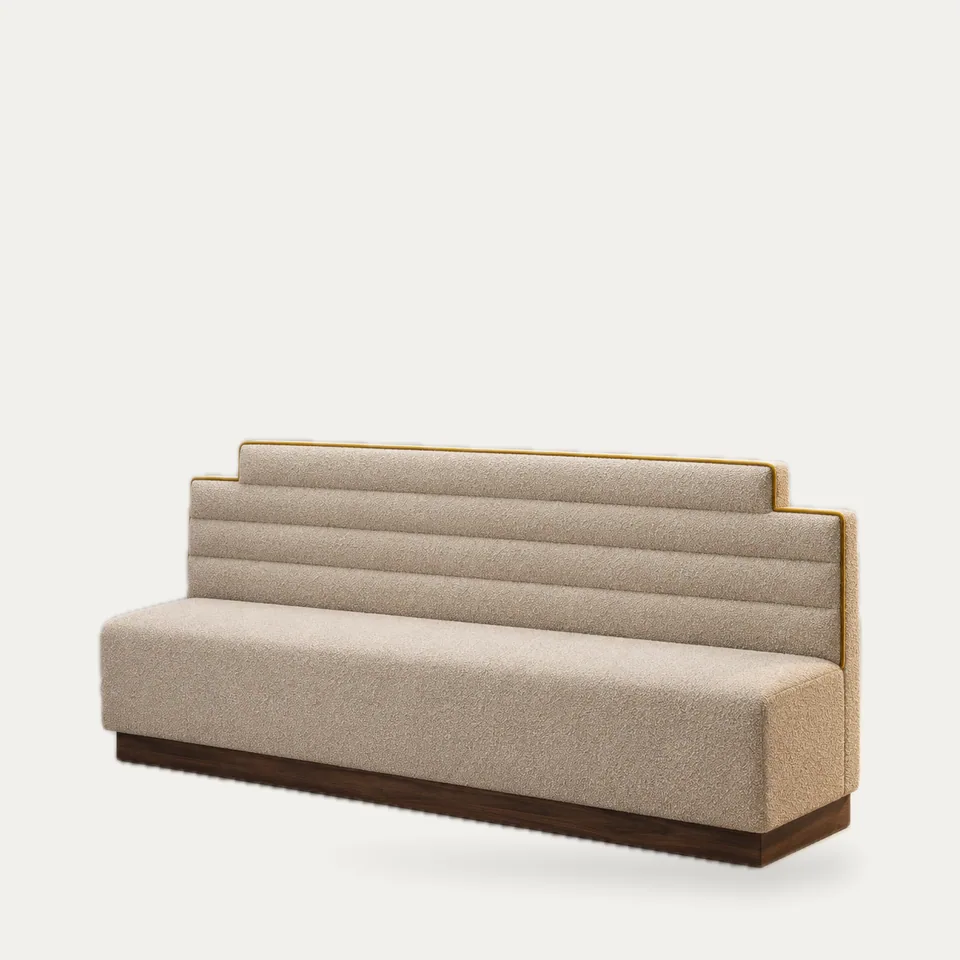
An end cap is the short face of a banquette where the run stops: usually at an aisle, a door or a column. It is the part every guest walks past, and the part that gets hit by trolleys, handbags and high chairs. A well-specified end cap answers both the design question and the maintenance one.
End cap options compared
| End cap | Look | Durability at the aisle | Typical setting |
|---|---|---|---|
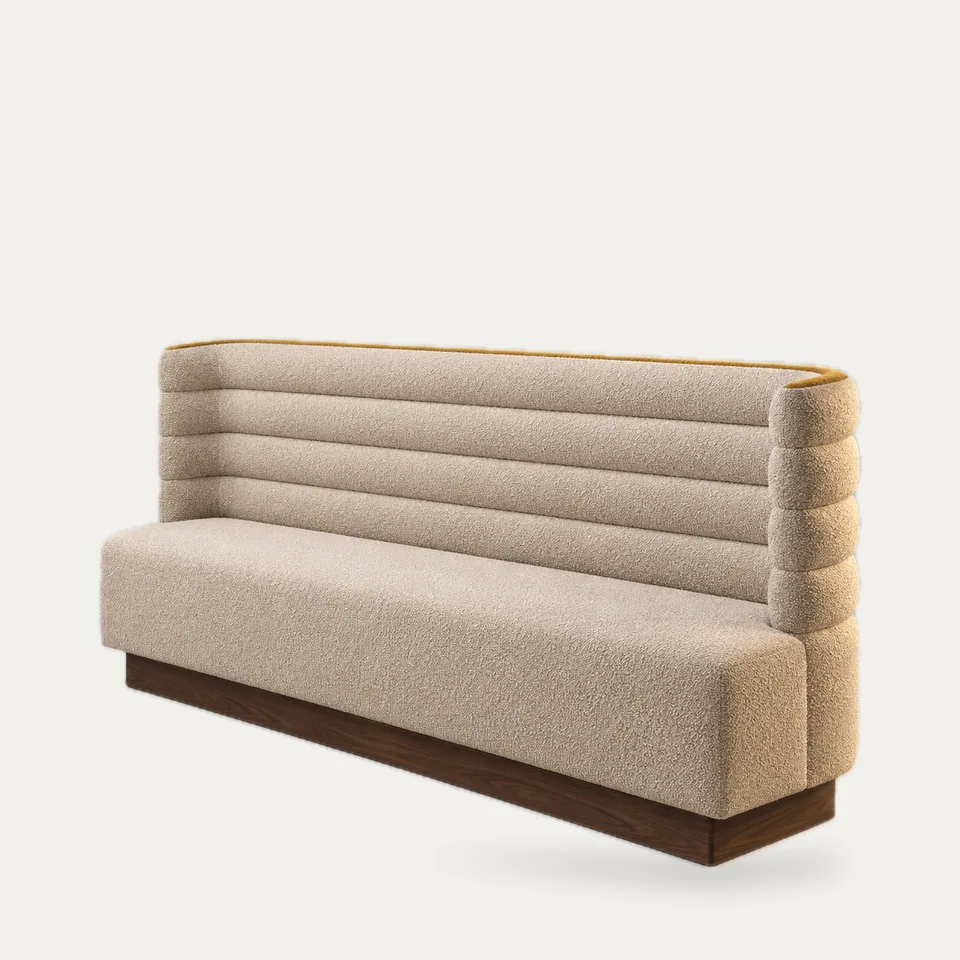
| Wraparound channel | Channels flow round a radius without a break | Good; soft edge, no corner to scuff | Boutique hotels, signature rooms |
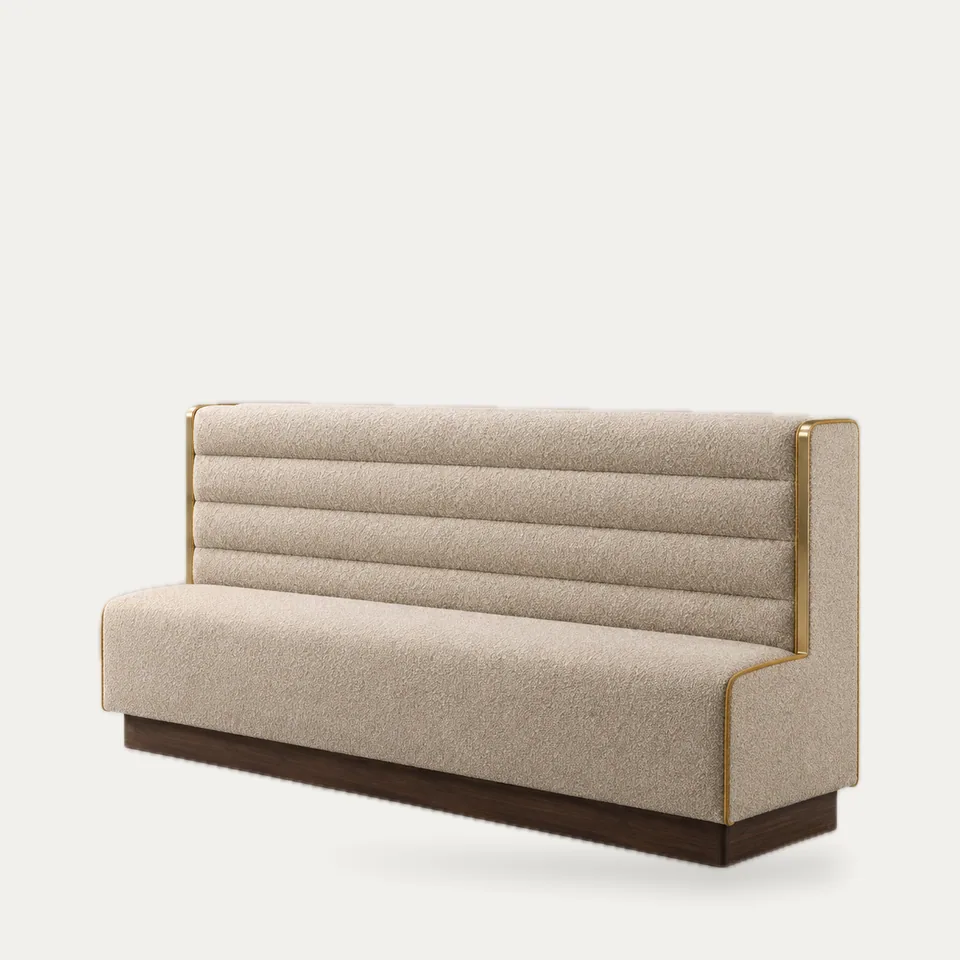
| Brass edge guard | Continuous brushed-brass L-profile | Very high; metal takes the knocks | Bars, hotel lobbies, busy aisles |
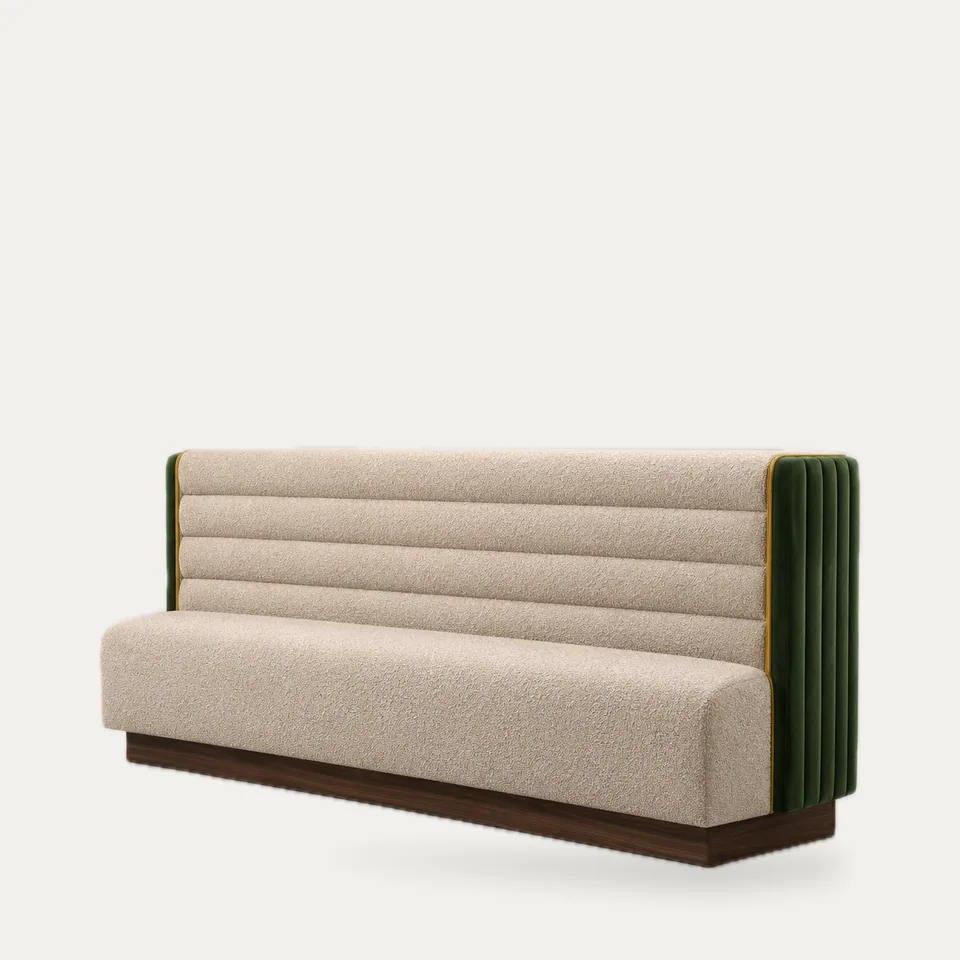
| Fluted velvet face | Contrasting vertical flutes, like a pilaster | Good | Brasseries, branded dining rooms |
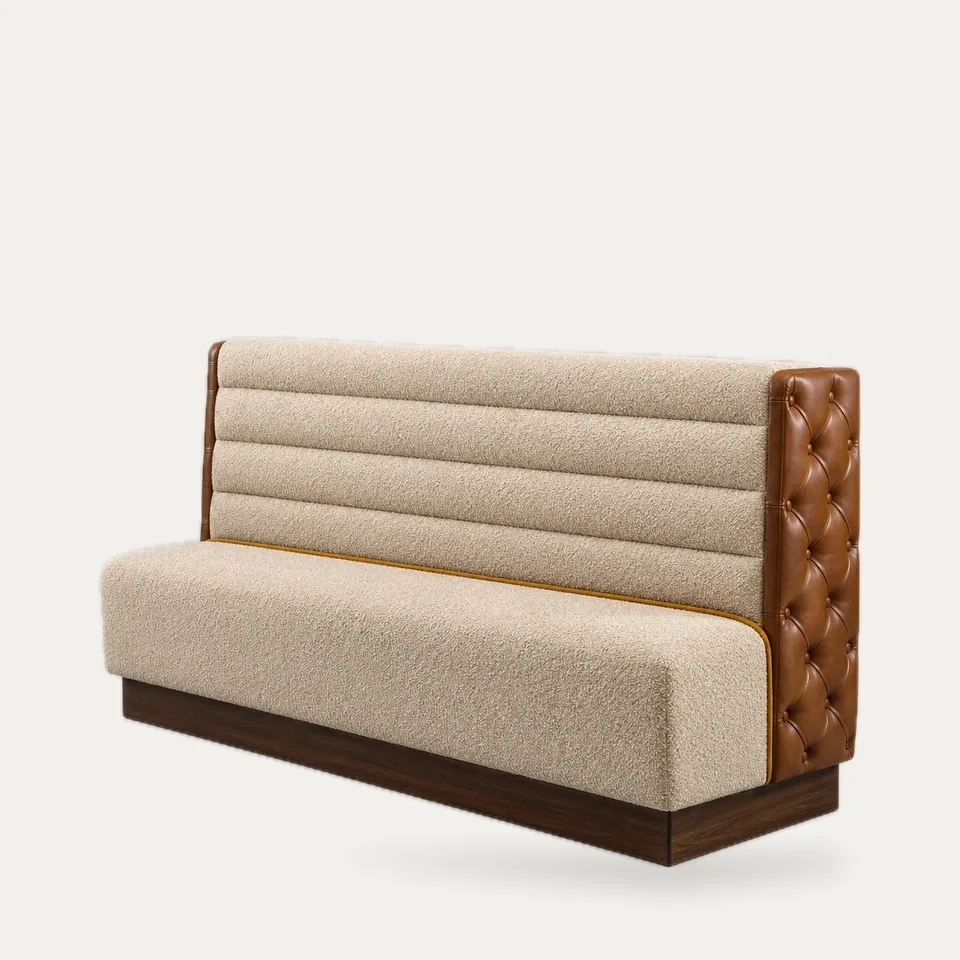
| Chesterfield face | Deep-buttoned leather on the end only | Good; buttons kept where nobody sits | Steakhouses, cigar rooms |
| Stepped Deco | Back profile drops in a step | Good | Art Deco bars, jazz rooms |
Specifying end caps
End caps are drawn with the run, not added afterwards. Tell us which ends meet a wall (a plain square end is cleaner there) and which are exposed to an aisle. Brass profiles are bent as one continuous piece with radiused corners; we suggest PVD-coated brass where hands will touch it every night. A contrasting end-face fabric is also the most economical place to bring a brand colour into the room.
End caps can be combined with any couture back or signature booth.