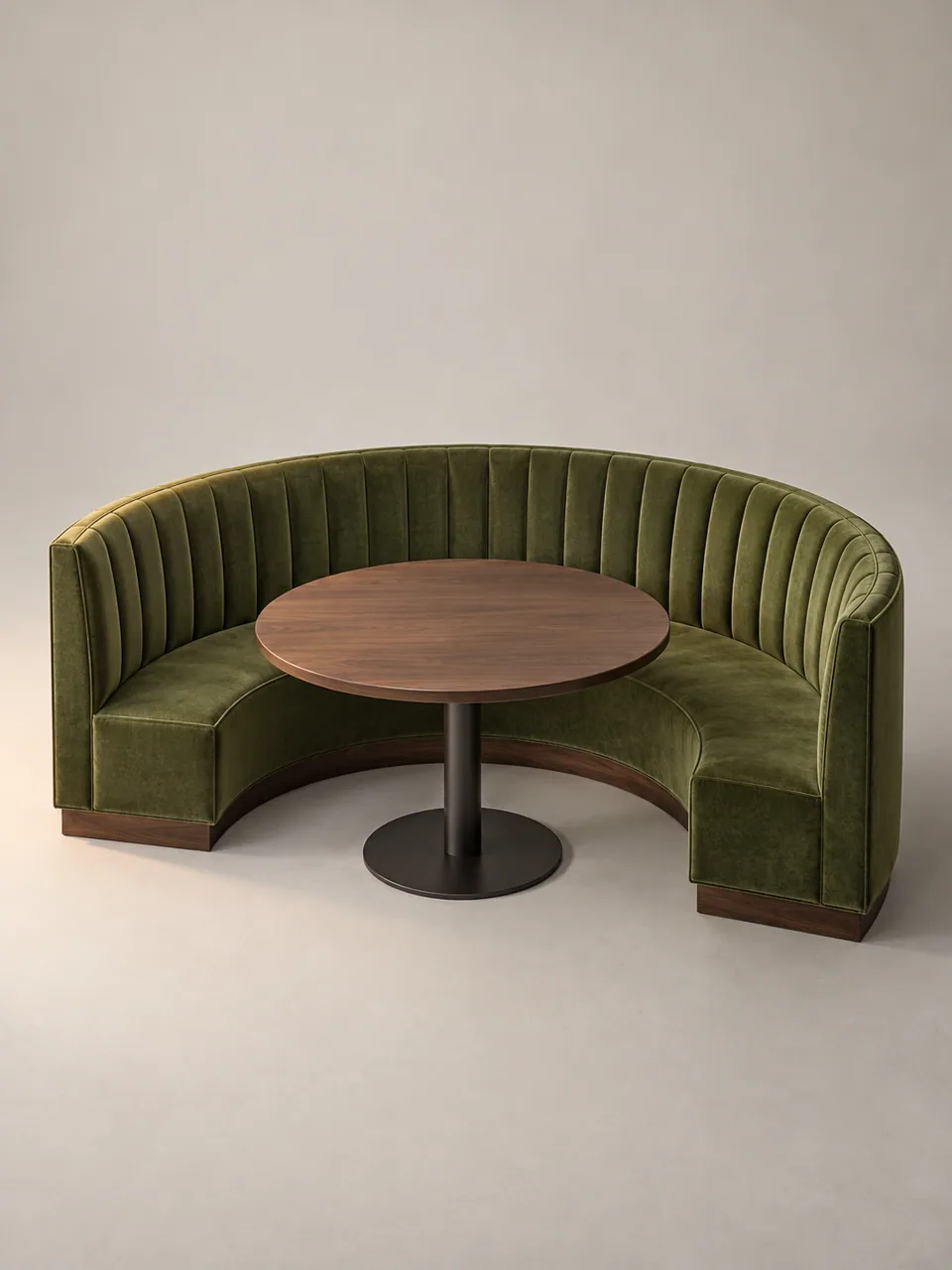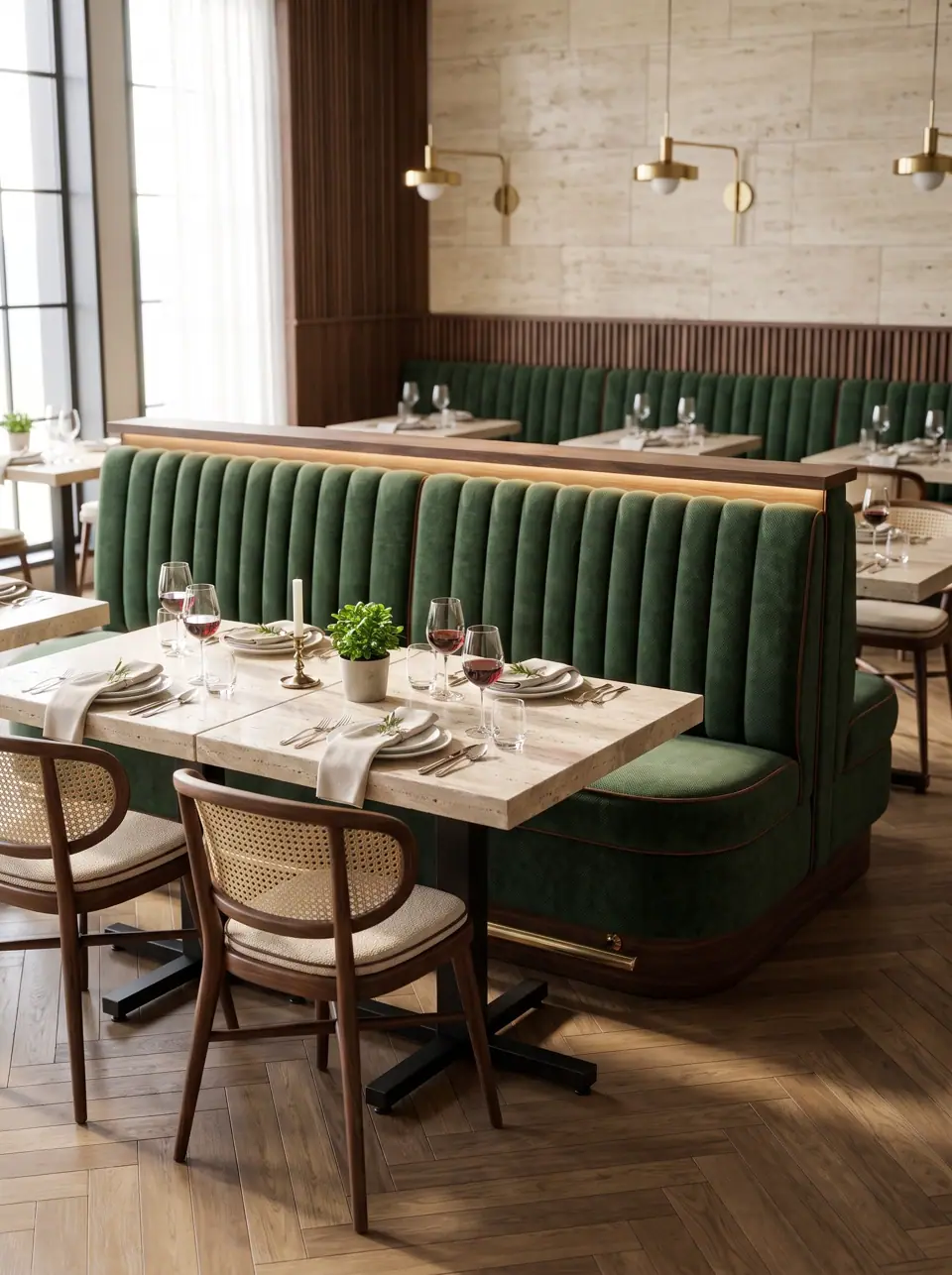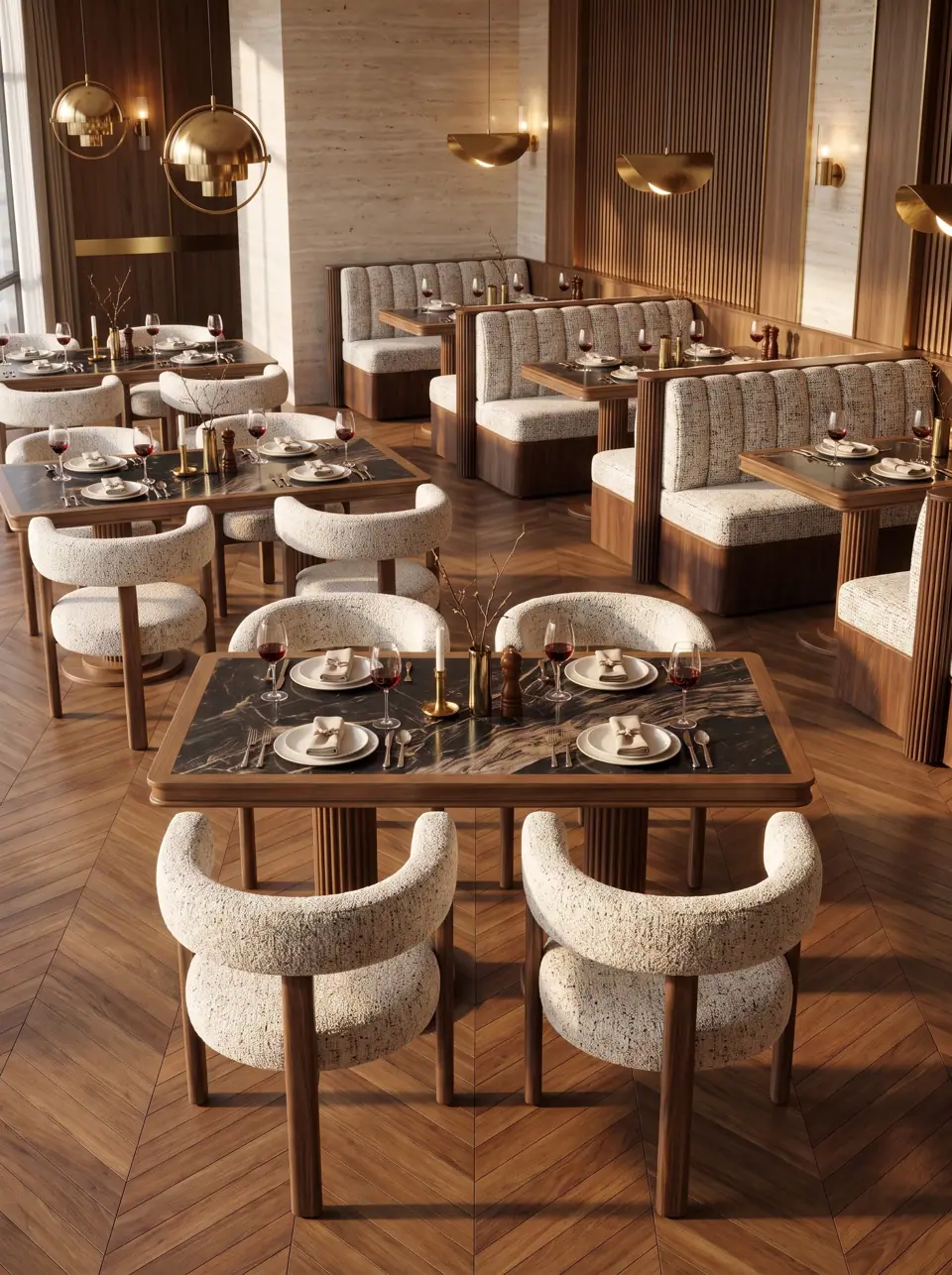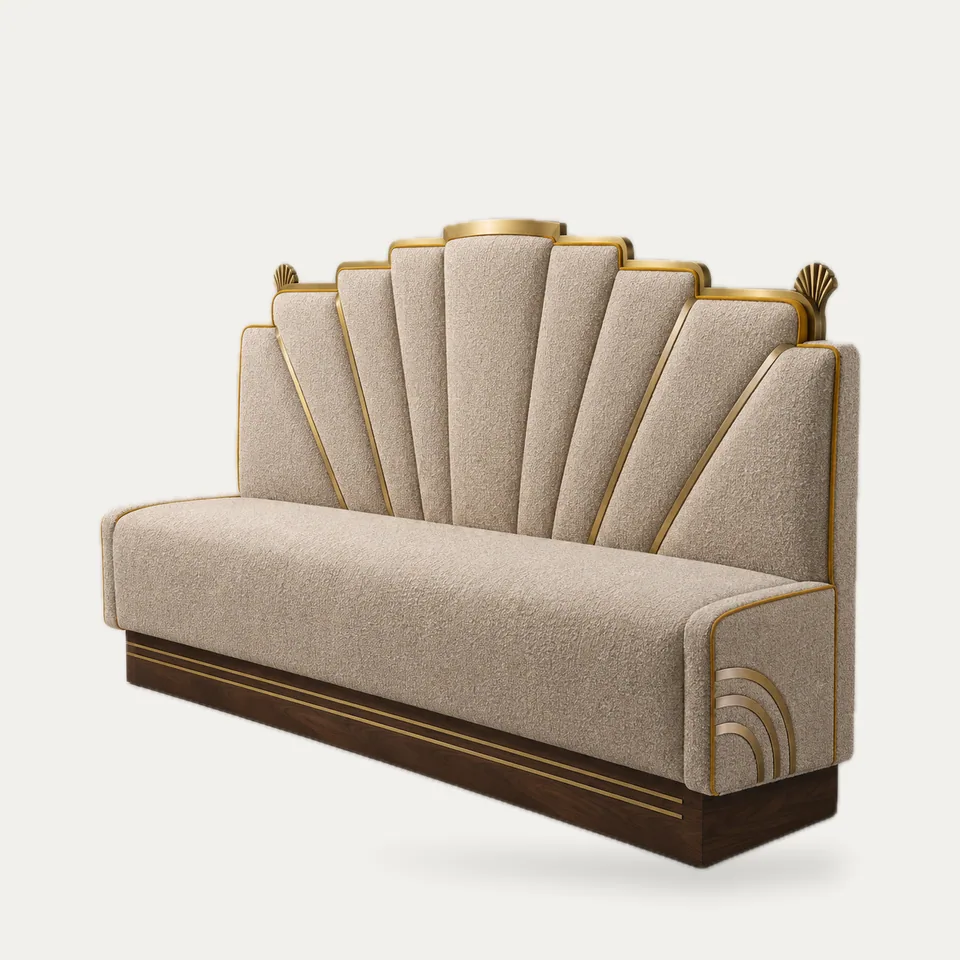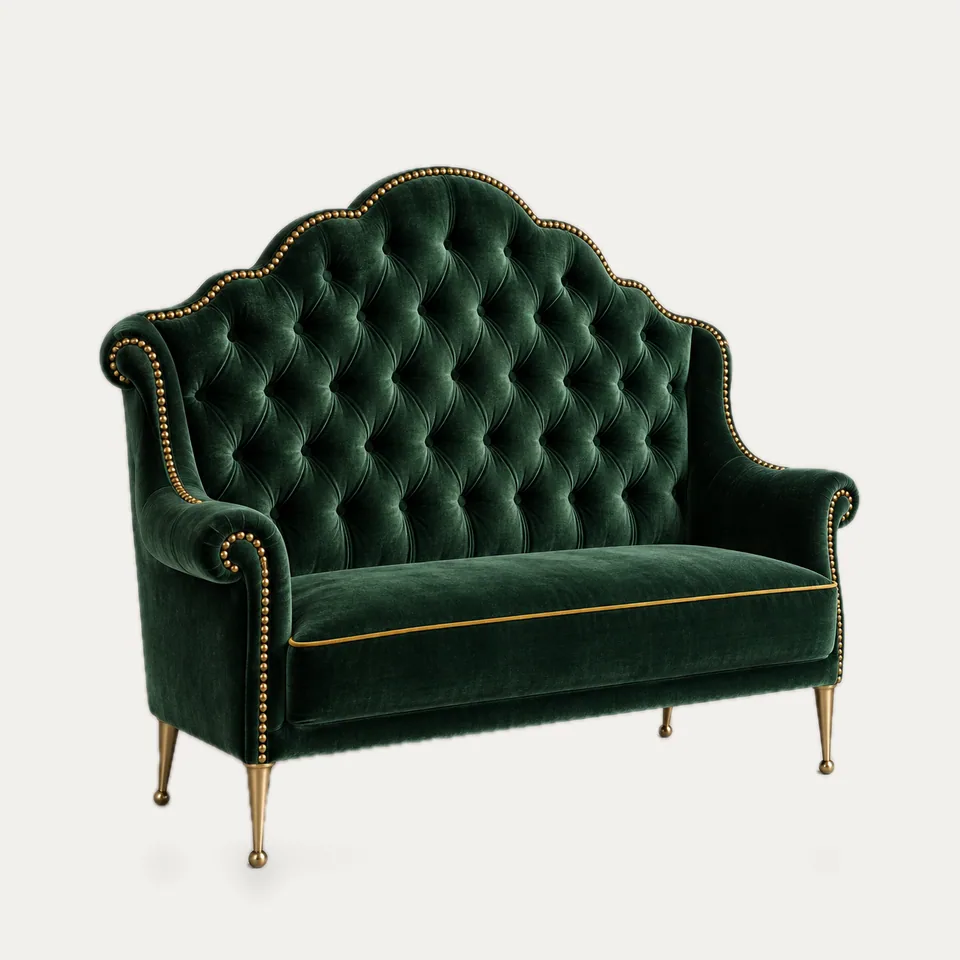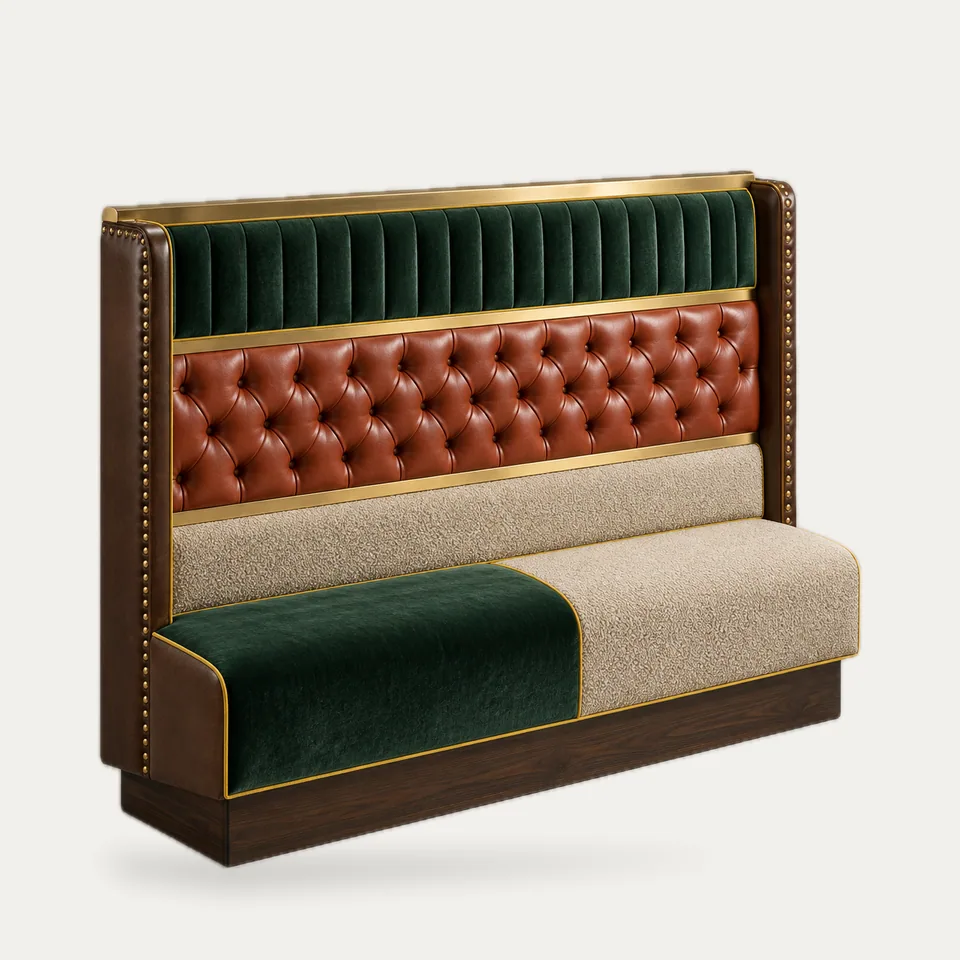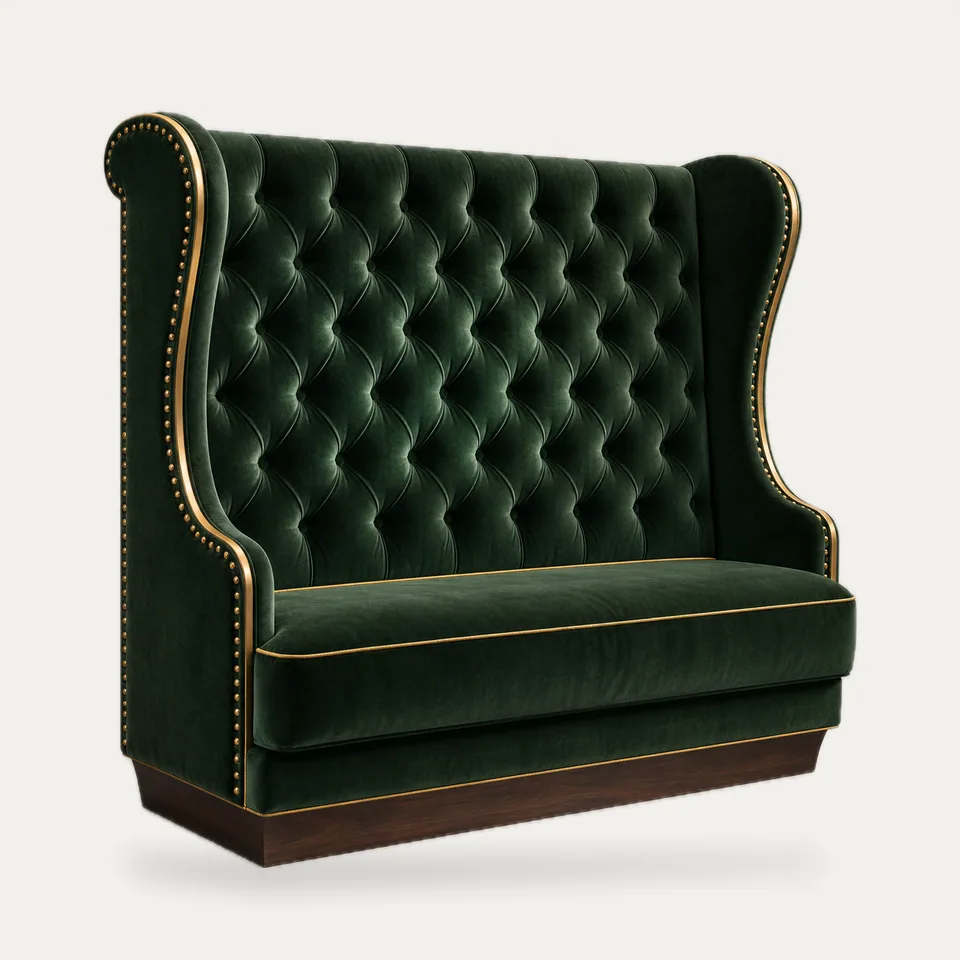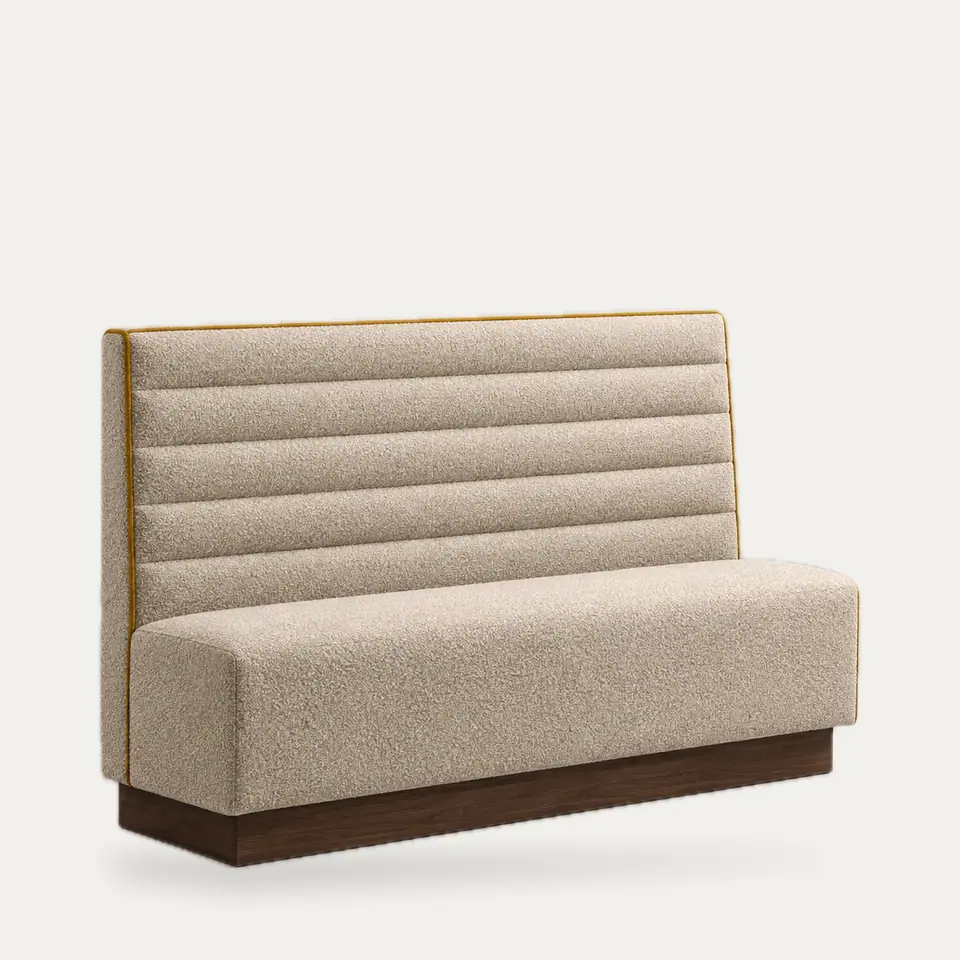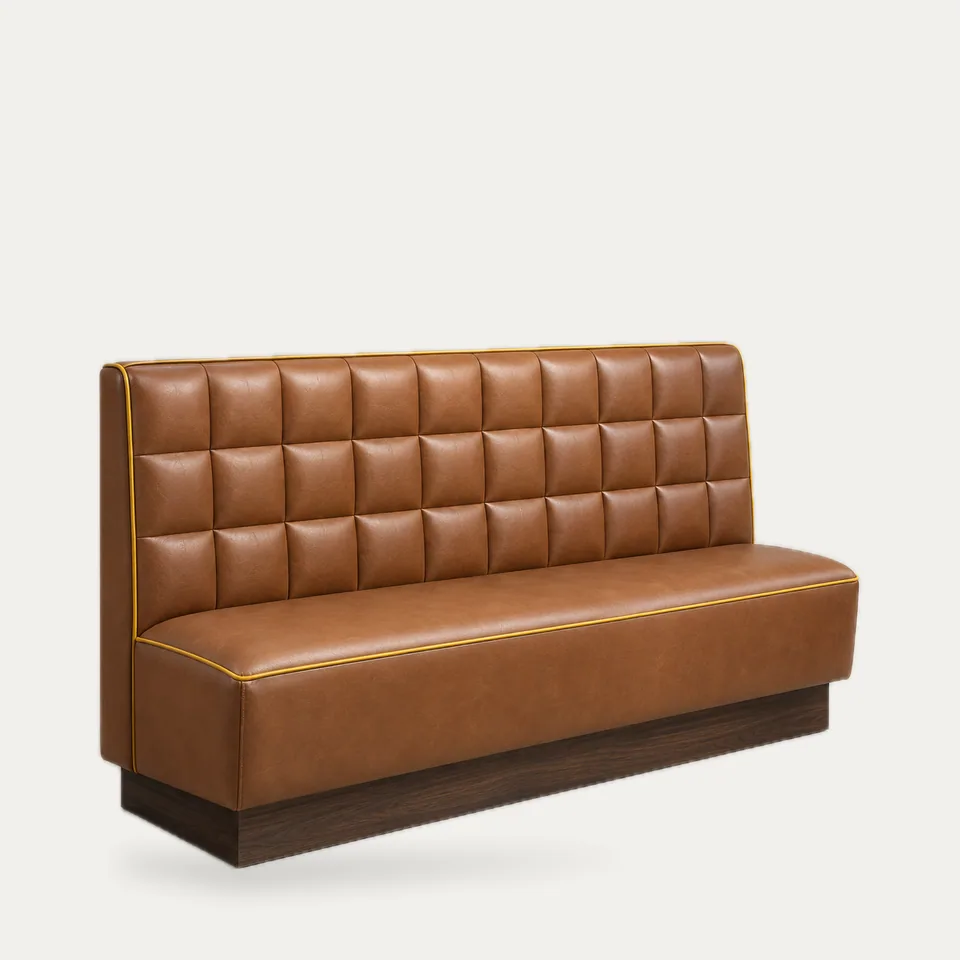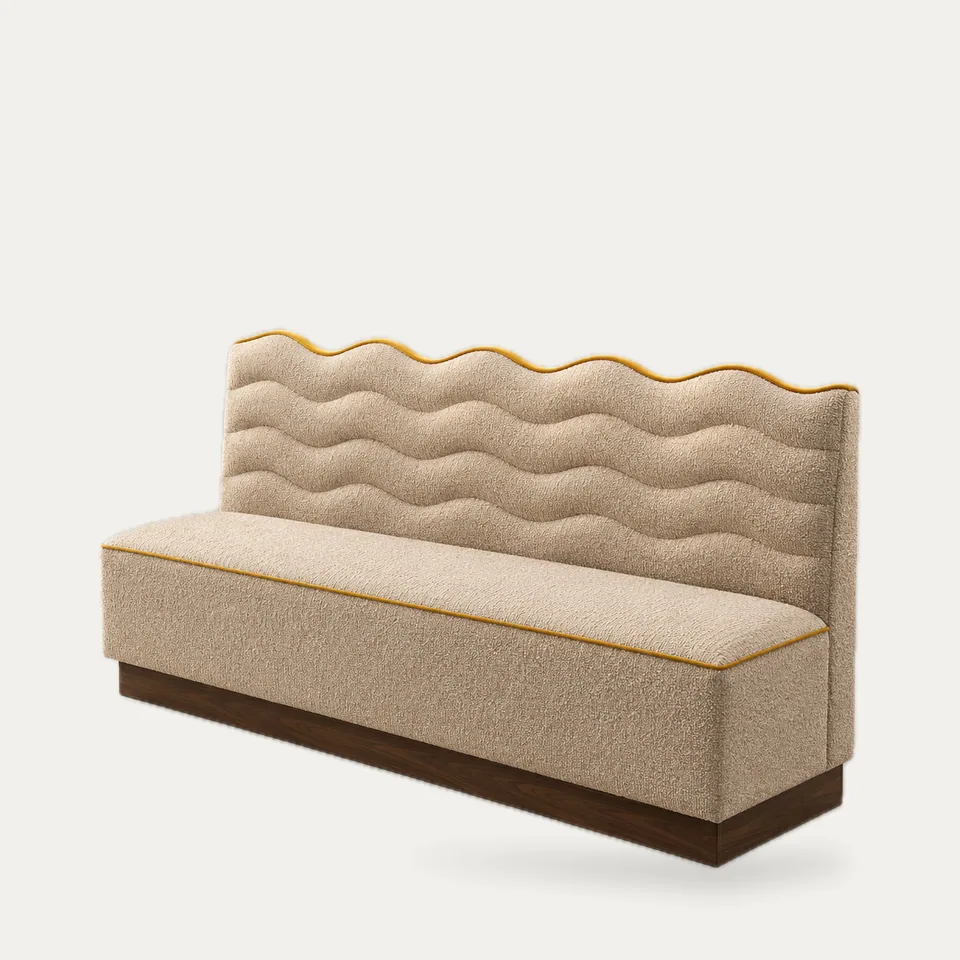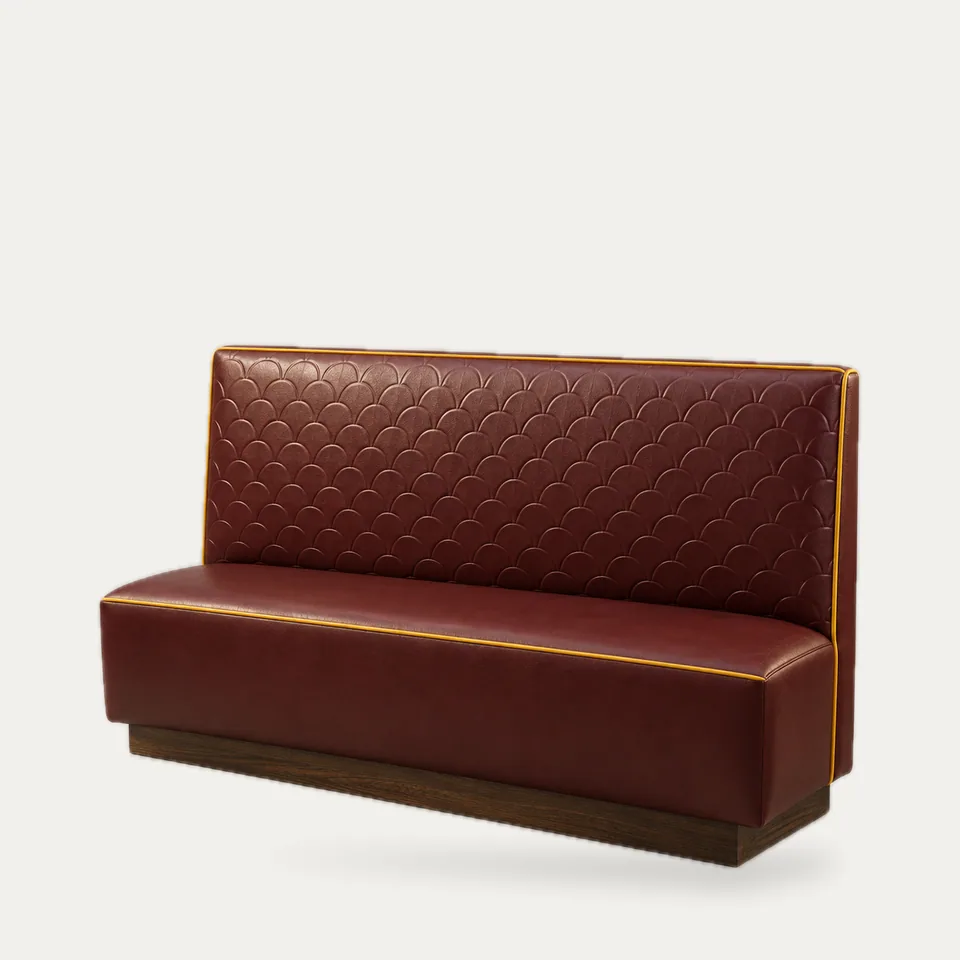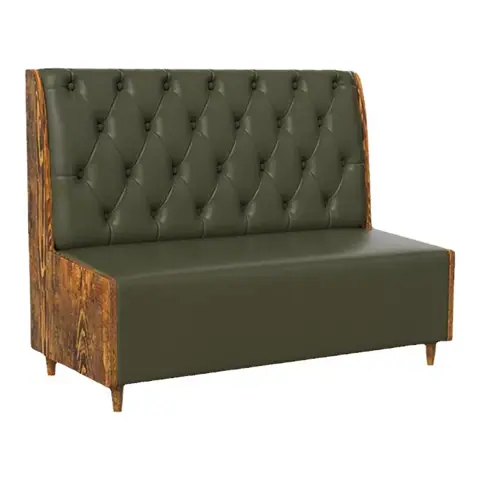
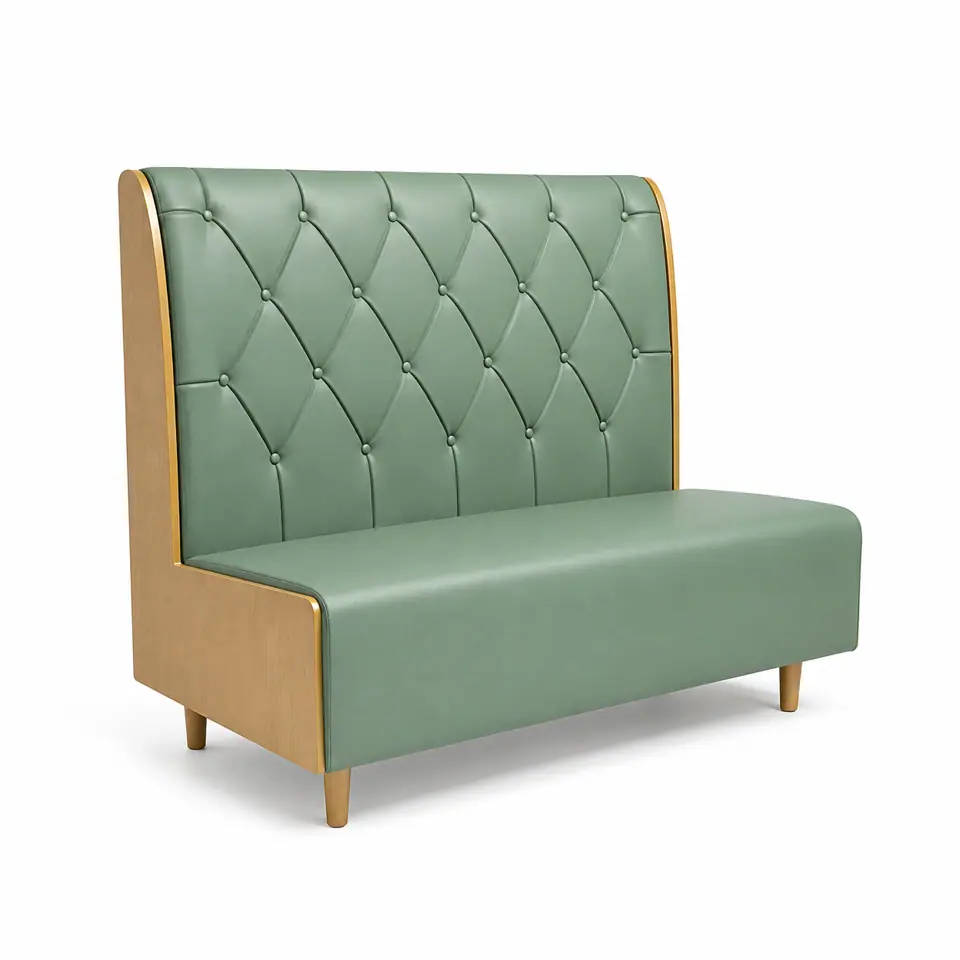
Deep diamond buttoning is one of the oldest ways to dress a banquette, and it still works. The back of this booth is a grid of tufted diamonds in olive green leather, framed by timber flanks with a distressed, weathered grain, with a plain continuous seat below. The second version is lighter: a pale sage leather with a fine brass edge line, a pale oak flank, and a back that sweeps down into a continuous front-wrapped seat.
The feel is a London chophouse or a hotel grill room, and it carries the weight of that tradition without any contrivance. The tall back gives each table a sense of enclosure, which is why high-backed booths are so often chosen for restaurants where conversation matters. Diamond tufting also tends to disguise wear, so leather ages gracefully rather than looking tired.
The frame is hardwood and plywood, the flanks are solid or veneered timber, and the diamond buttons are fixed through to the frame, with the tufting folded and pinned by hand. Leather is the traditional choice, though a vinyl or fabric can be used. Button covering, depth of tufting and flank timber are set on the drawing. Dimensions and length are to order, and we can join runs with concealed bolts.