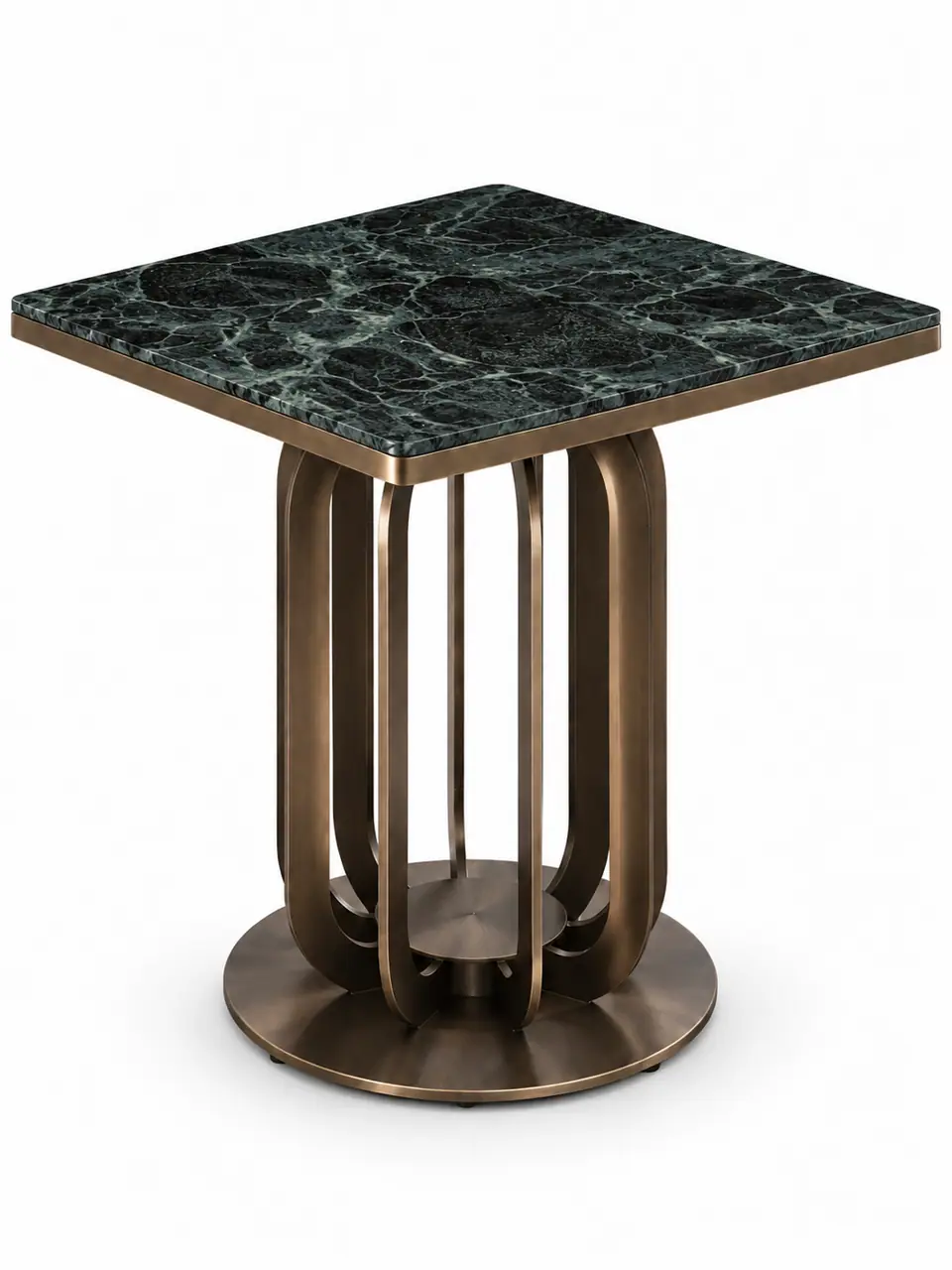
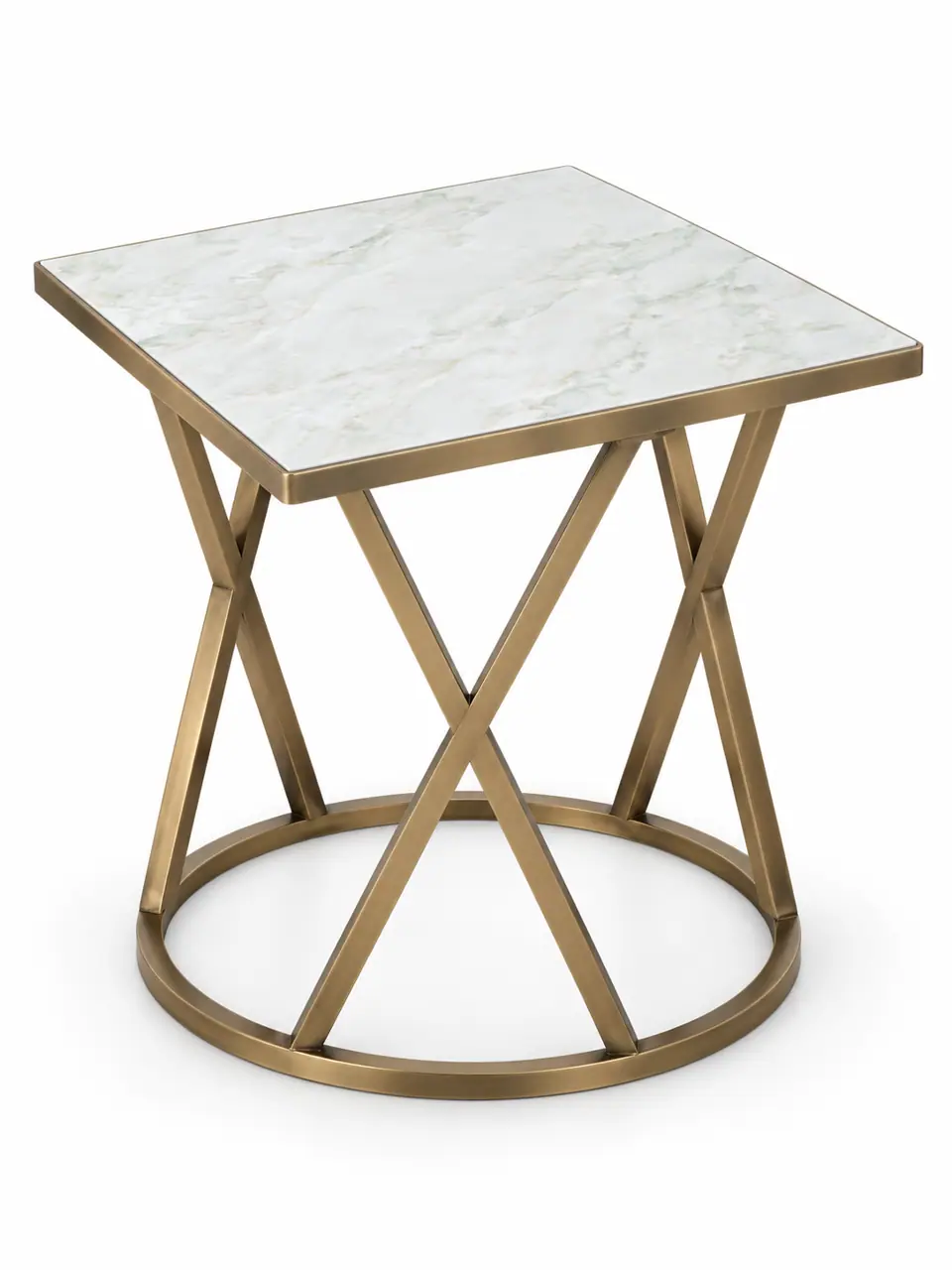
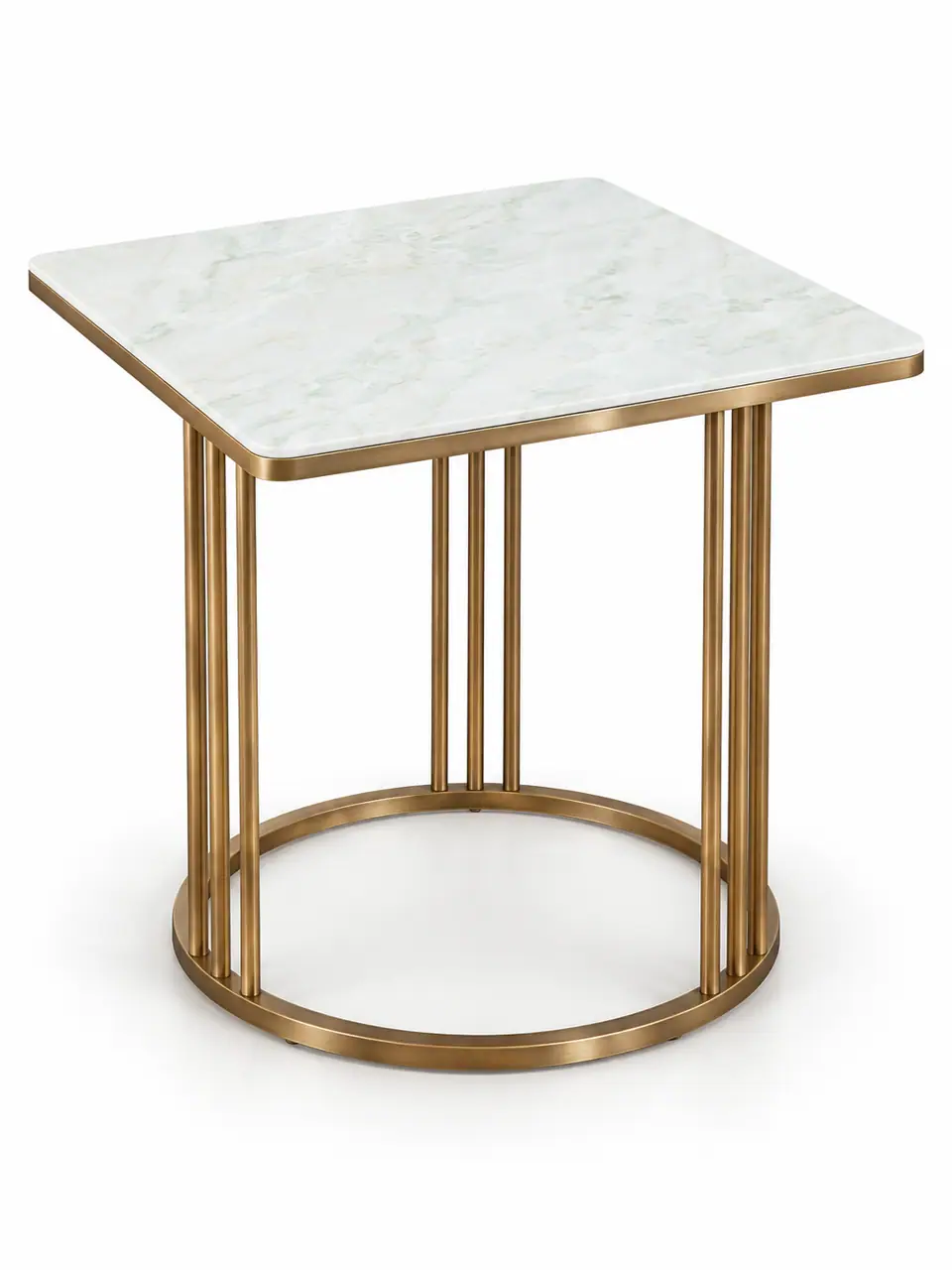
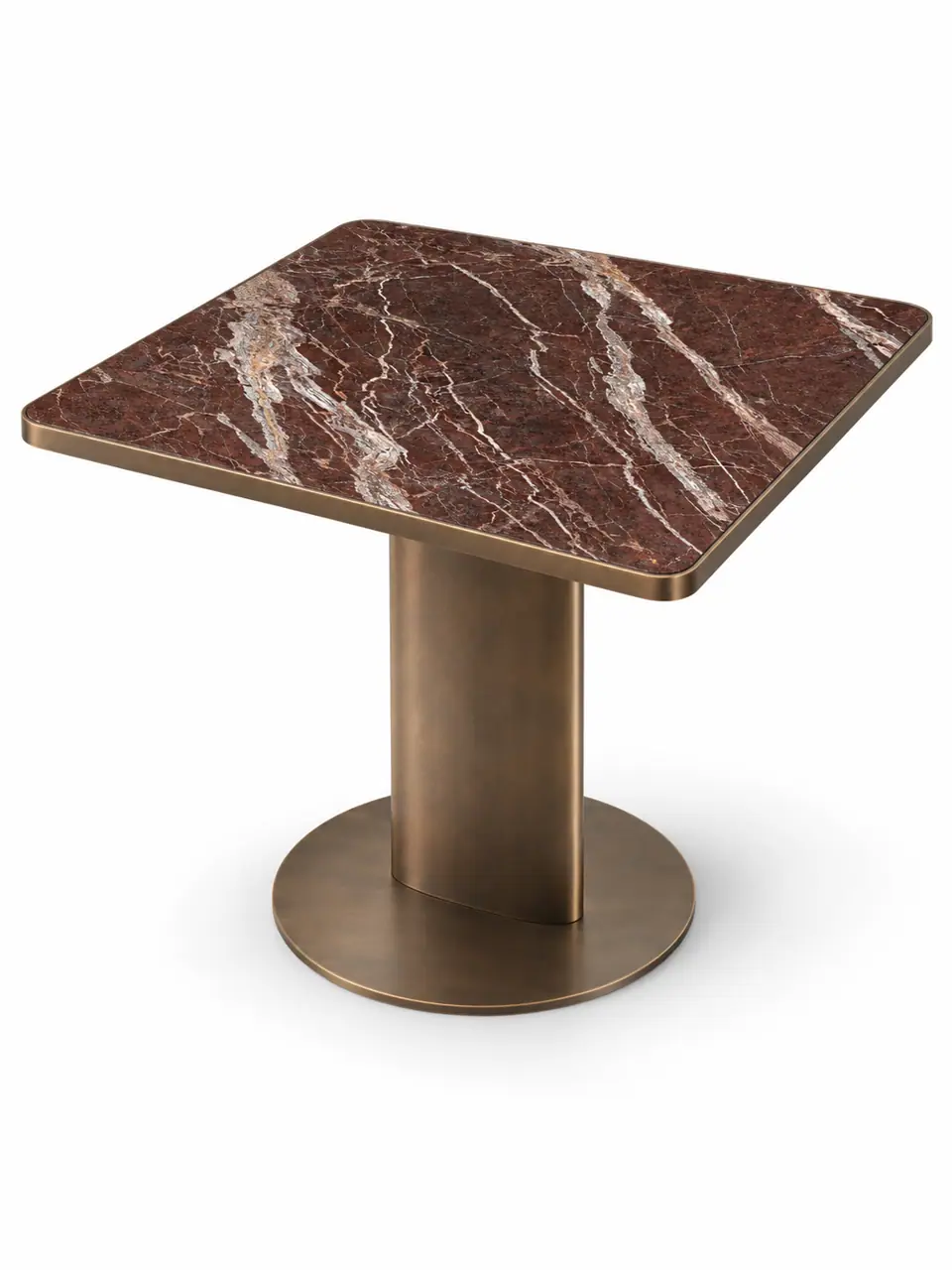
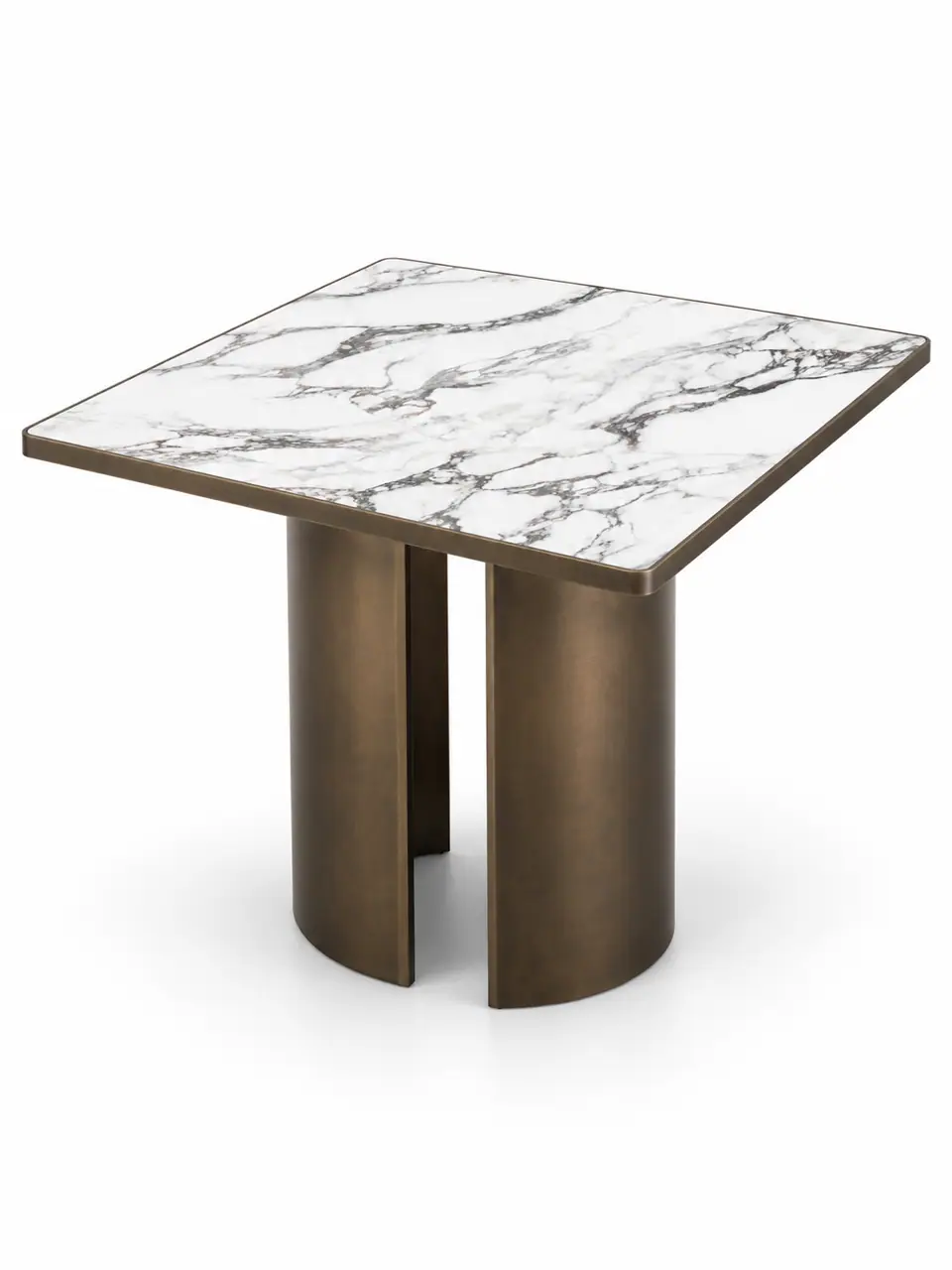
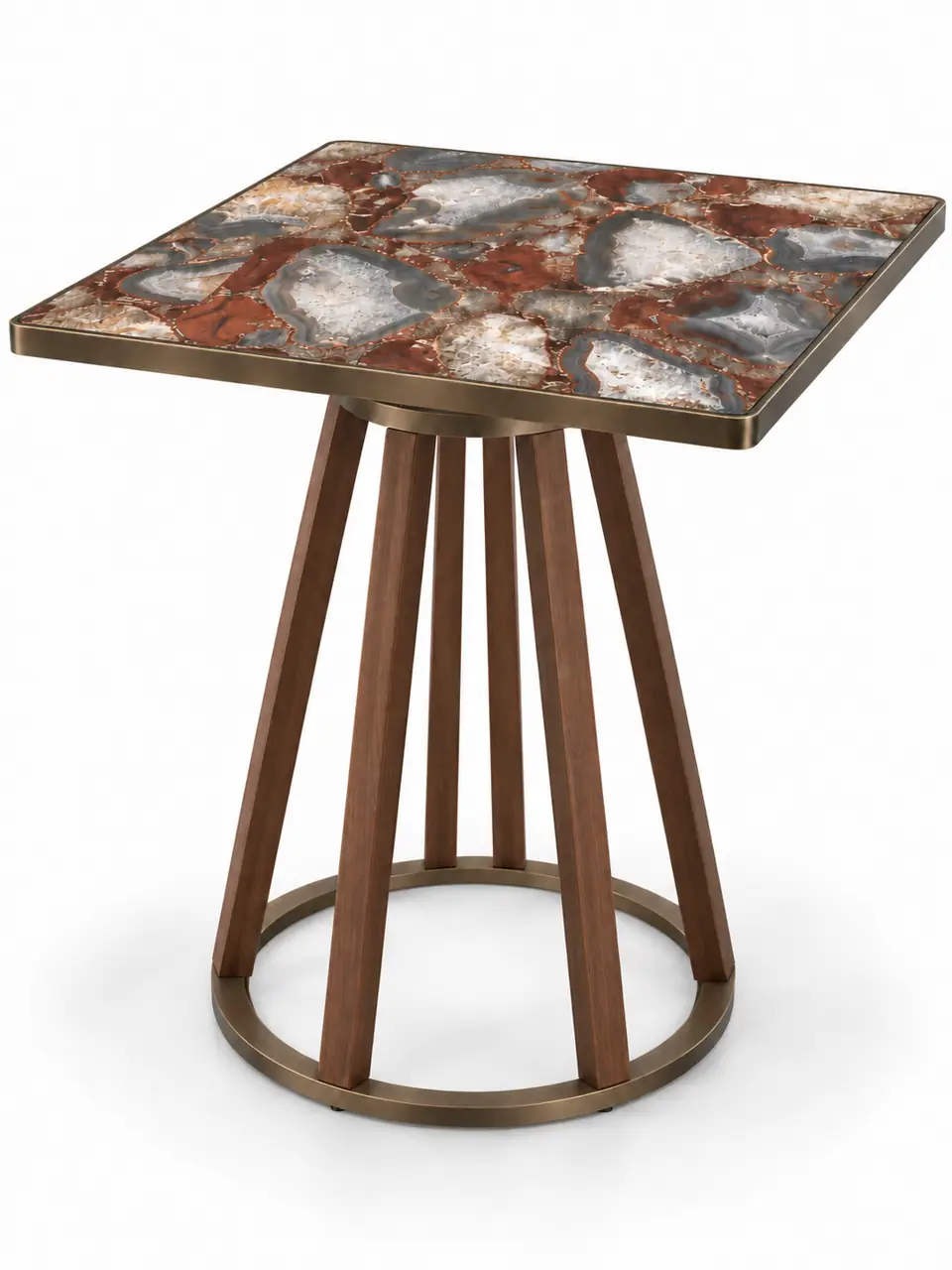
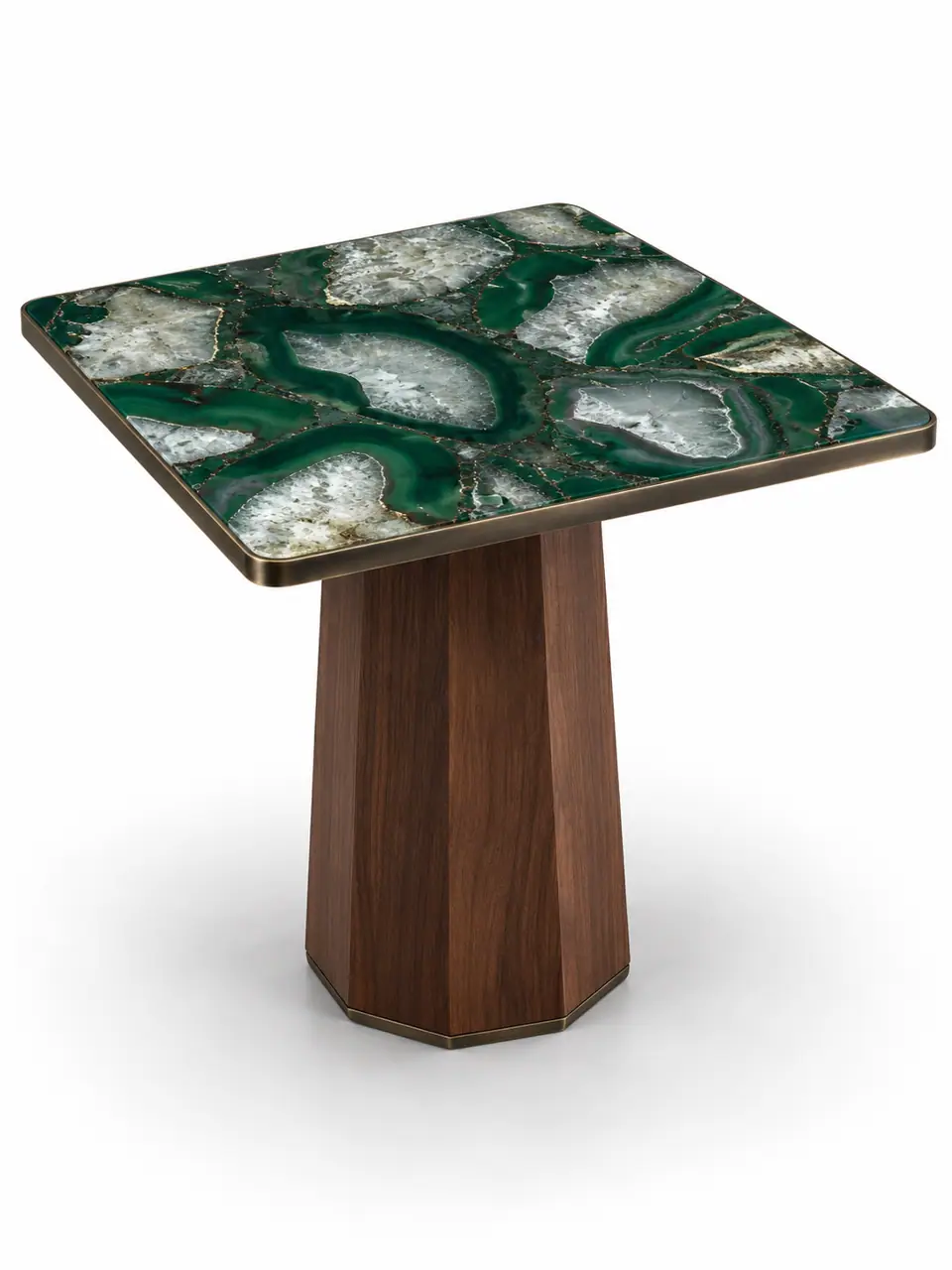
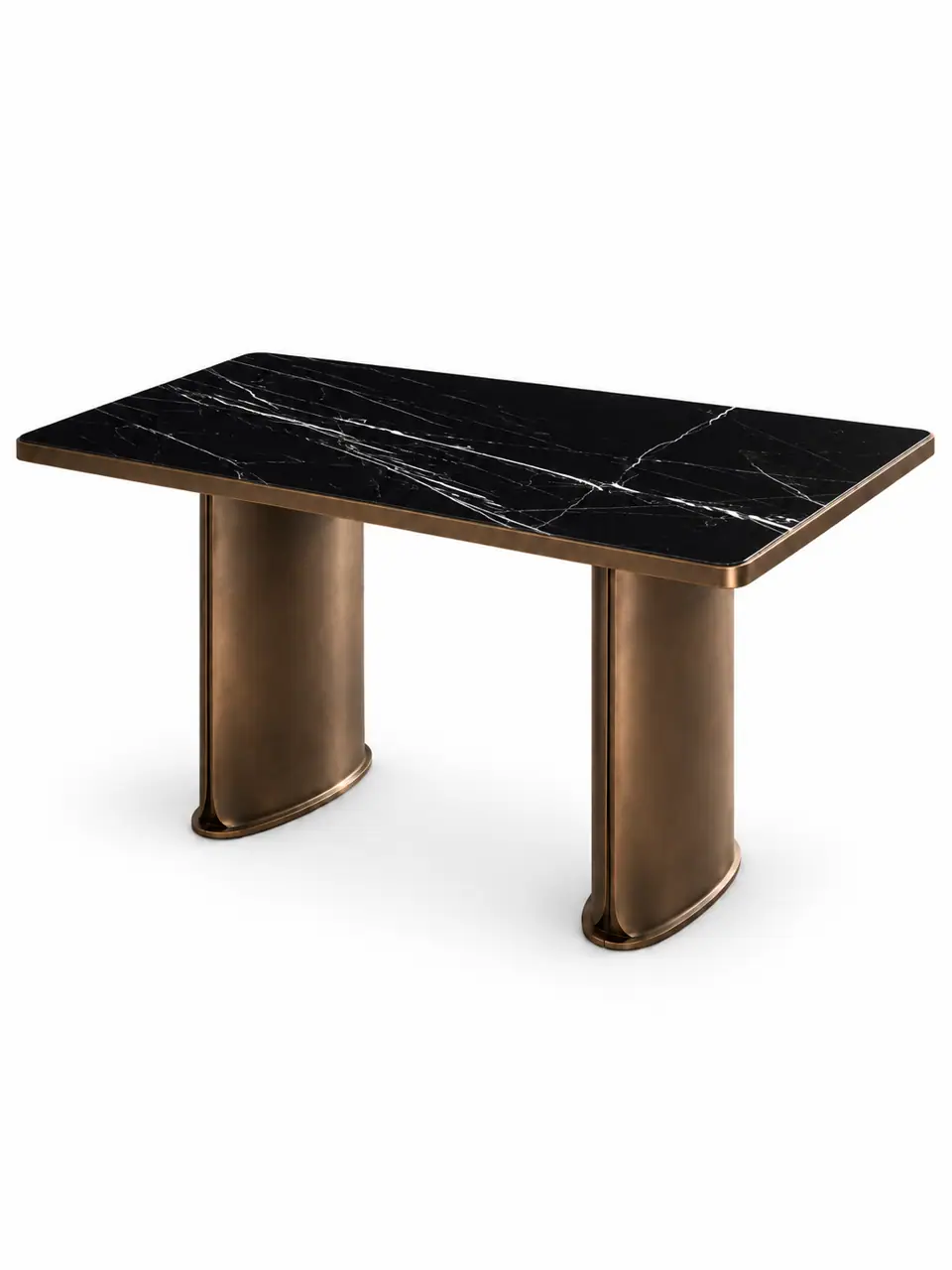
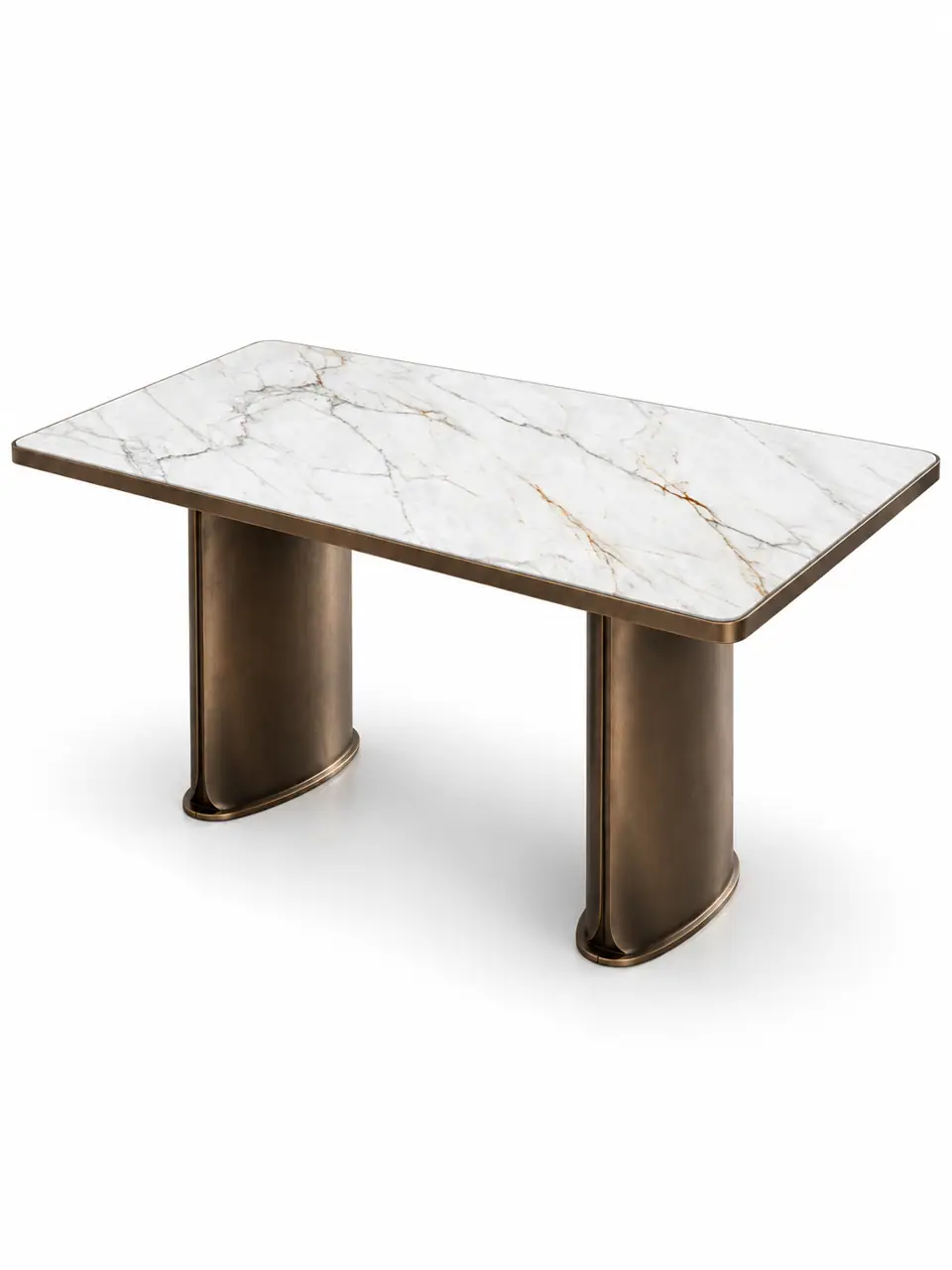
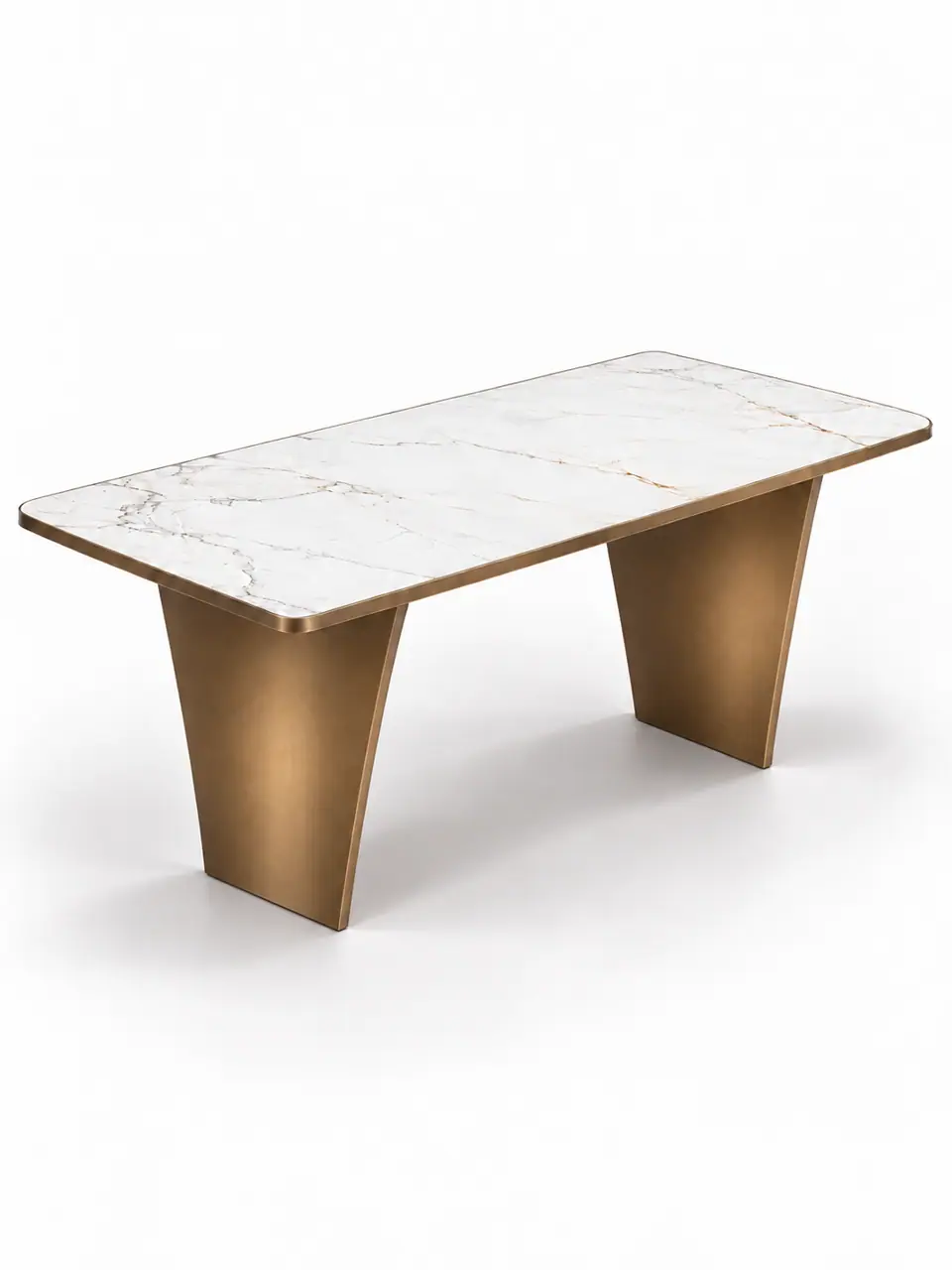
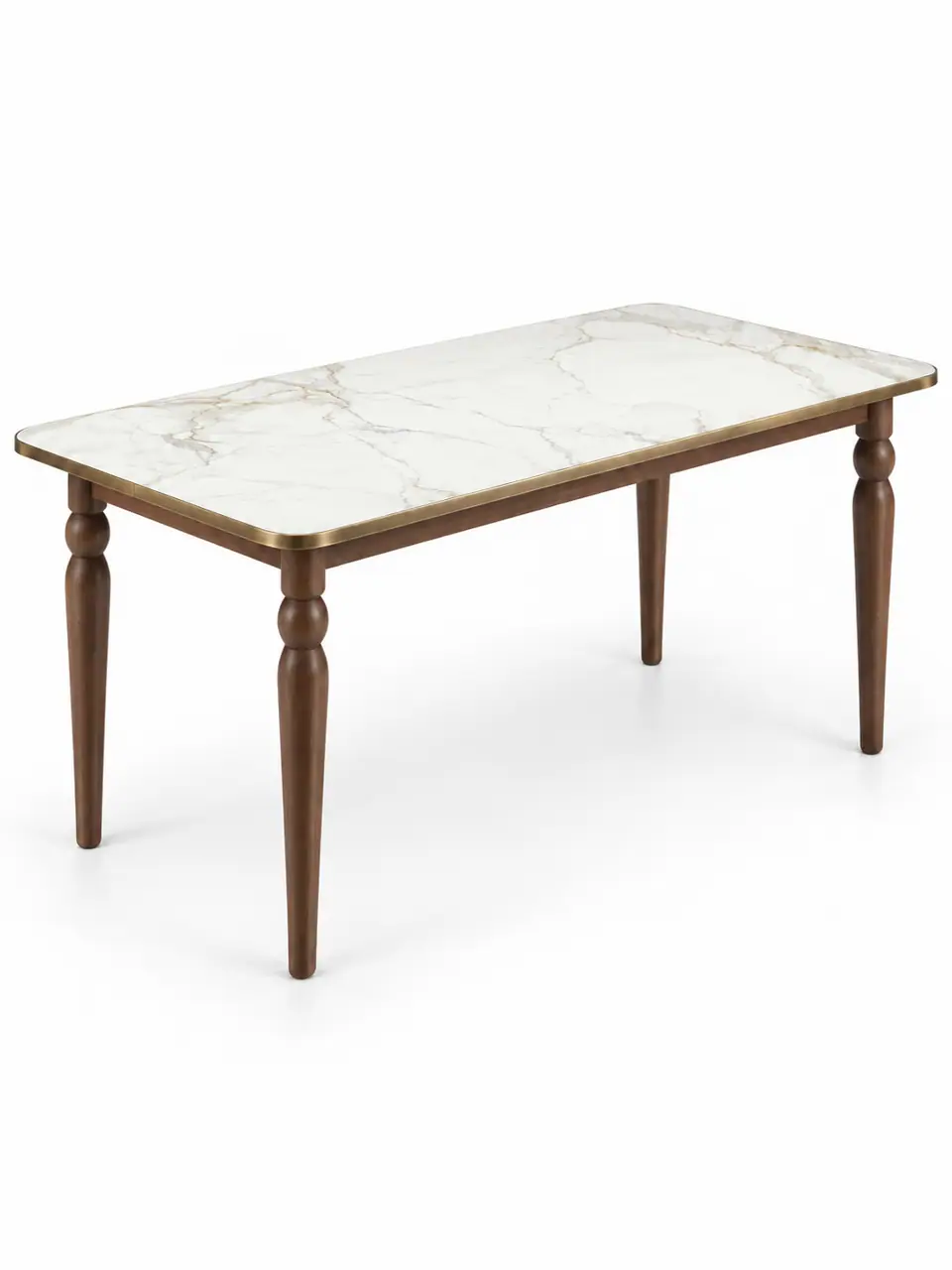
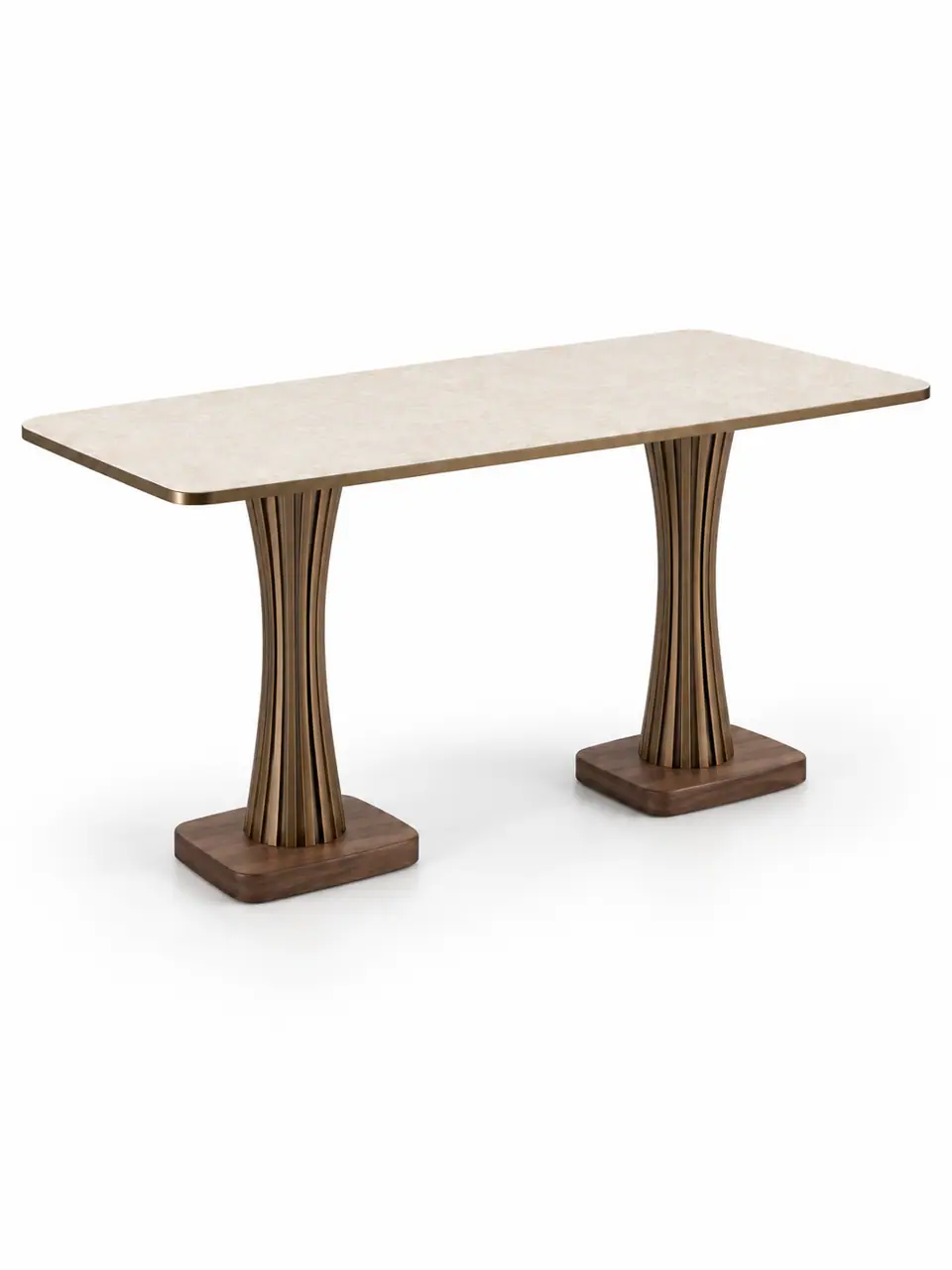
A banquette is only as good as the table in front of it. Set a couture-backed seat opposite a table with the wrong height, a clumsy pedestal or a cold, shiny top, and the whole bay feels unfinished. These tables are drawn for the banquette room: stone-look tops, slim antique-brass or bronze edges, and bases that sit well back from the seat so knees are never in the way.
What is in the range
| Group | Size | Seats | Character |
|---|---|---|---|
| Square tables | 60 × 60 cm | 2 | Brass pedestals, cages and columns; deep green, claret and agate-look tops |
| Long tables | 120 × 60 cm | 2–4 | Twin pedestals, trestle and turned-leg tables; white, black and cream stone looks |
Every table stands at 75 cm, the usual height for dining tables beside a 46 cm banquette seat, which gives a seat-to-table drop of around 29 cm. Other sizes, round tops and other stones or edge tones are made to order.
Tops and edges
The tops are sintered stone, a dense, non-porous slab that is far less prone to staining than natural marble or agate, an important point where red wine and oil meet a pale surface. We reproduce the looks that suit a period or deco room: dark green marble, claret, black with white veining, gold-veined white, and the layered, crystalline patterns of agate. A thin metal band in antique brass or bronze protects the arris and gives the stone a finished, jewelled edge.
Placing a table to a banquette
Allow roughly 15–20 cm between the seat front and the table edge for comfortable access, and keep pedestals and cages clear of the knee line. Pedestal bases leave the most room along a banquette; trestles and twin pedestals suit longer runs. Our shop drawings show table and seat together, in plan and section.