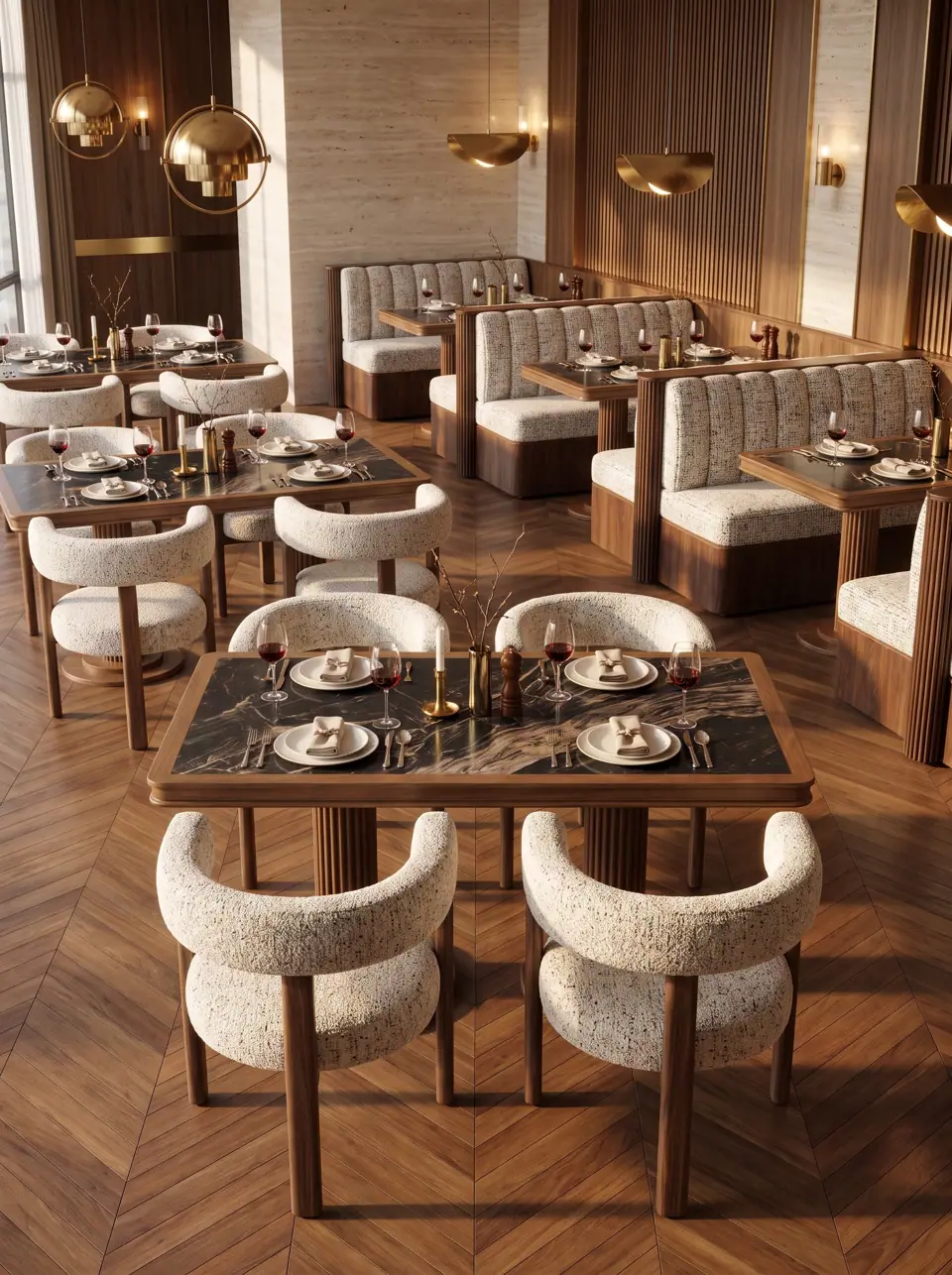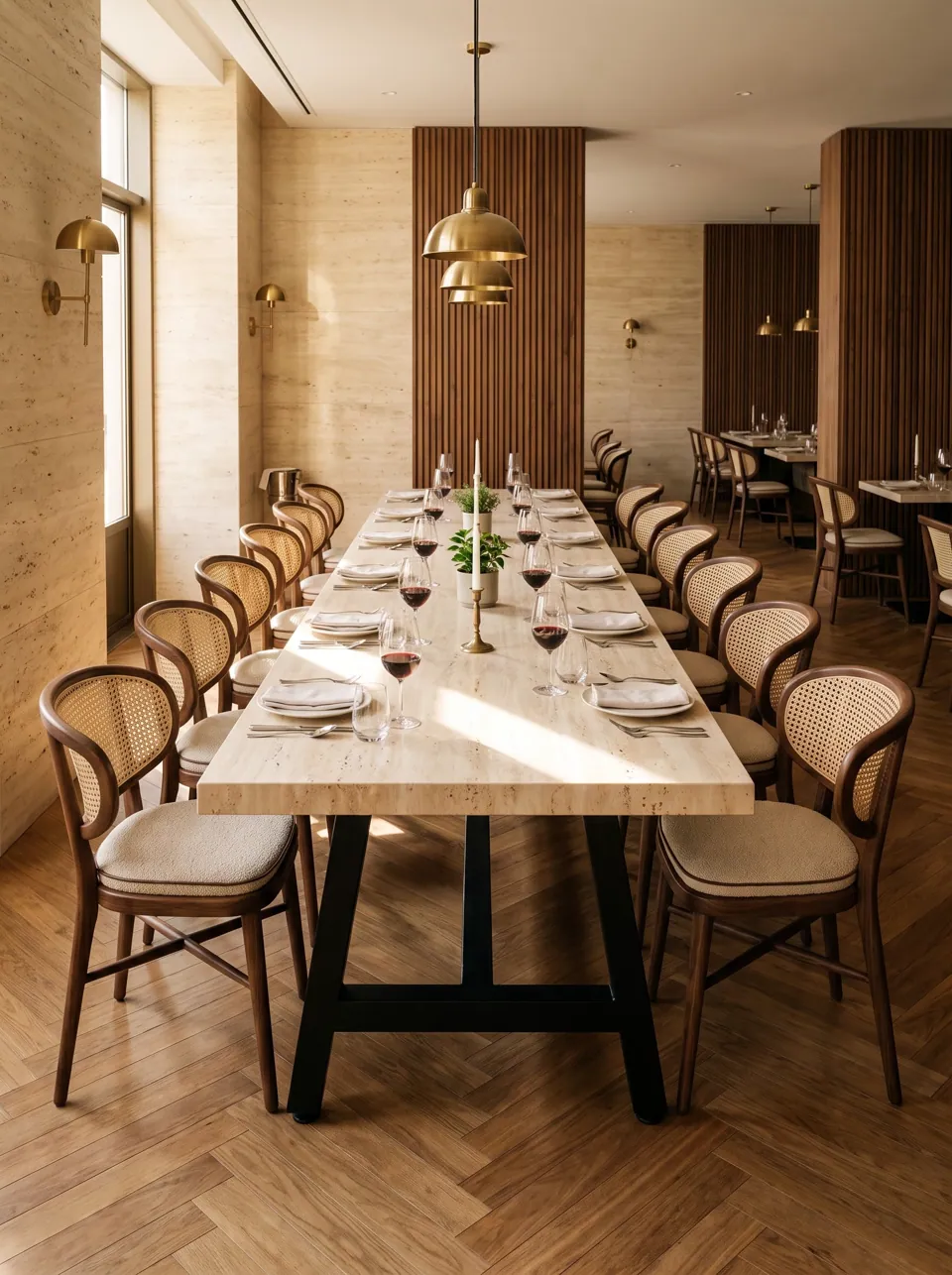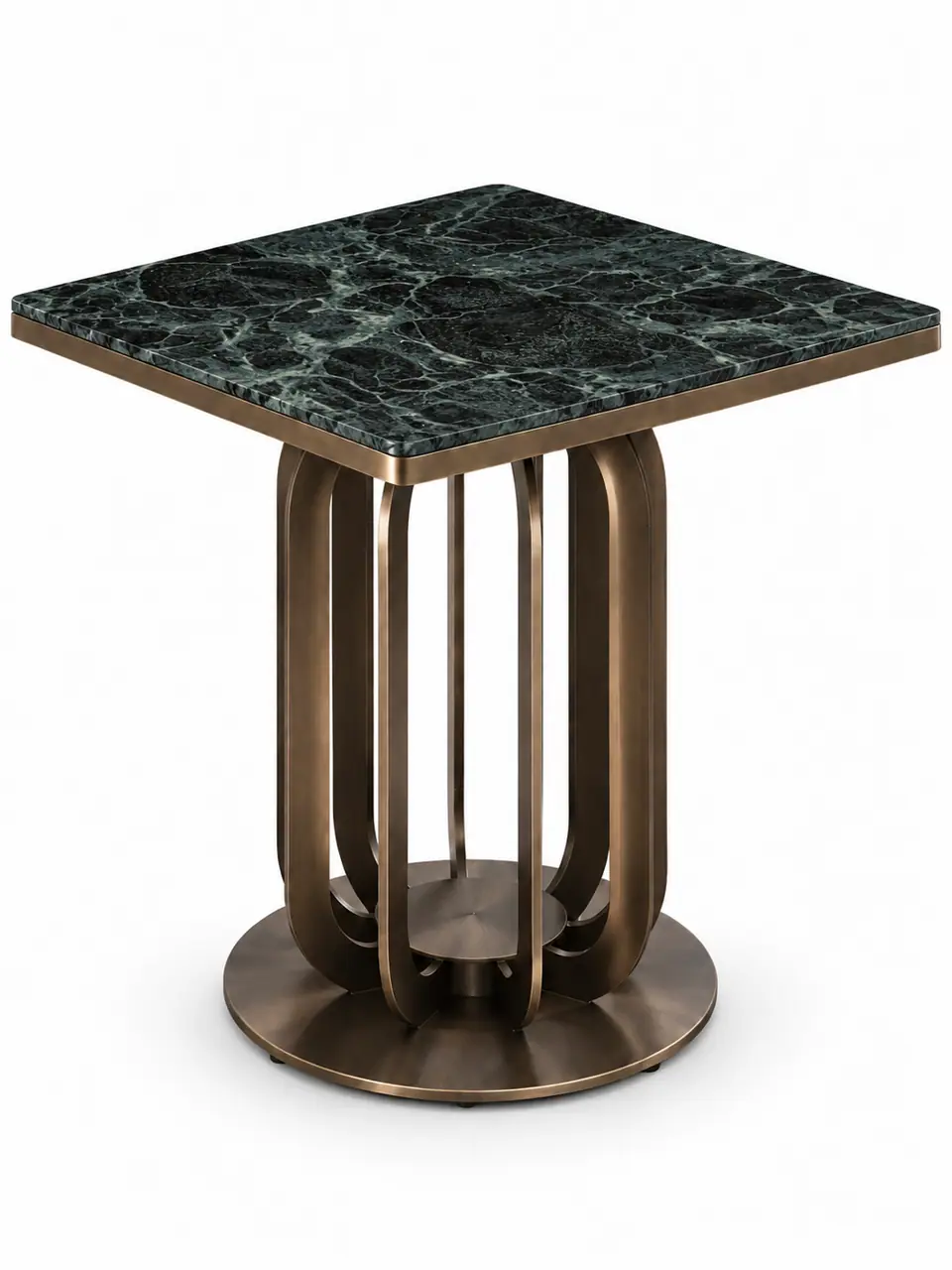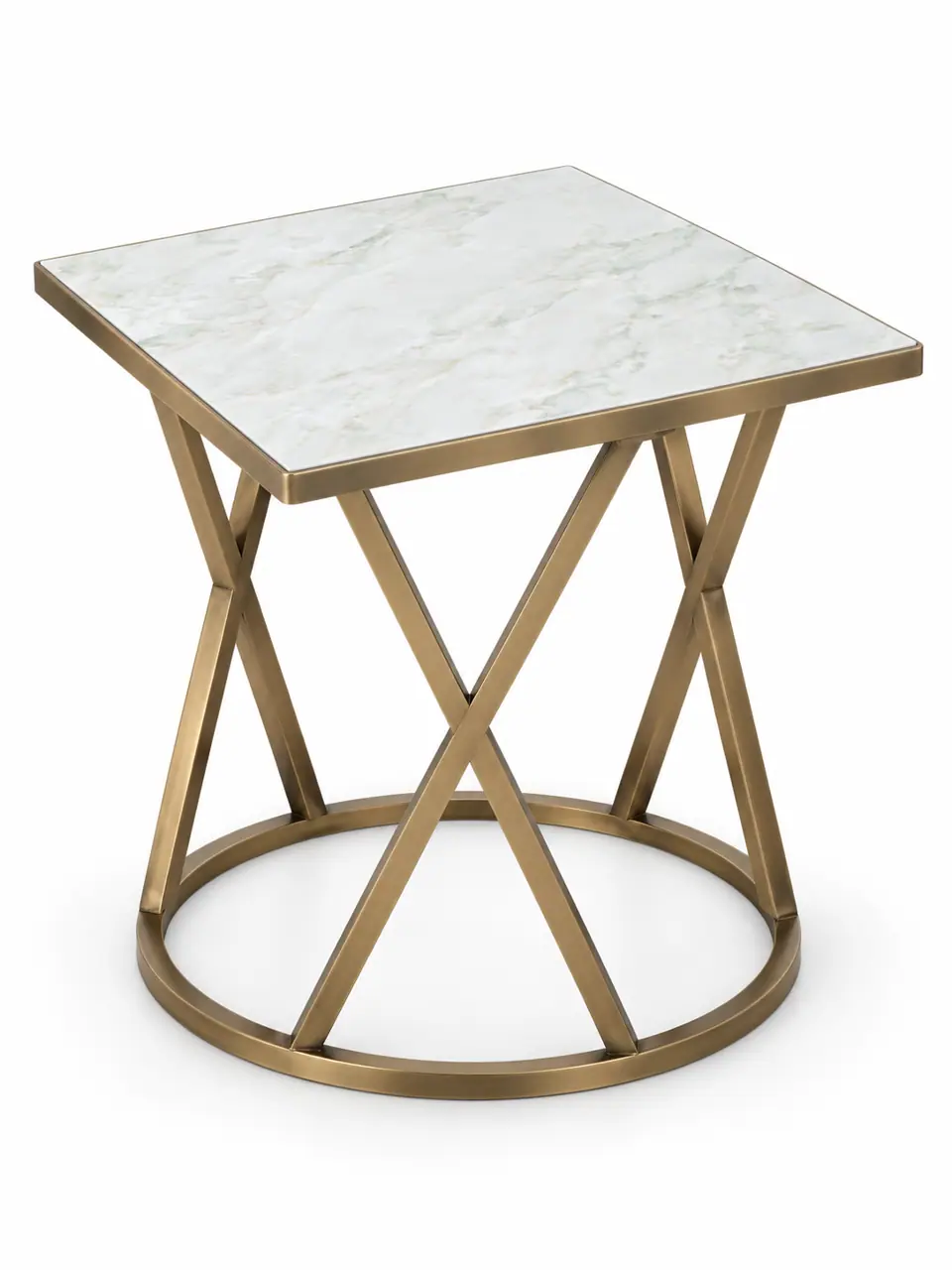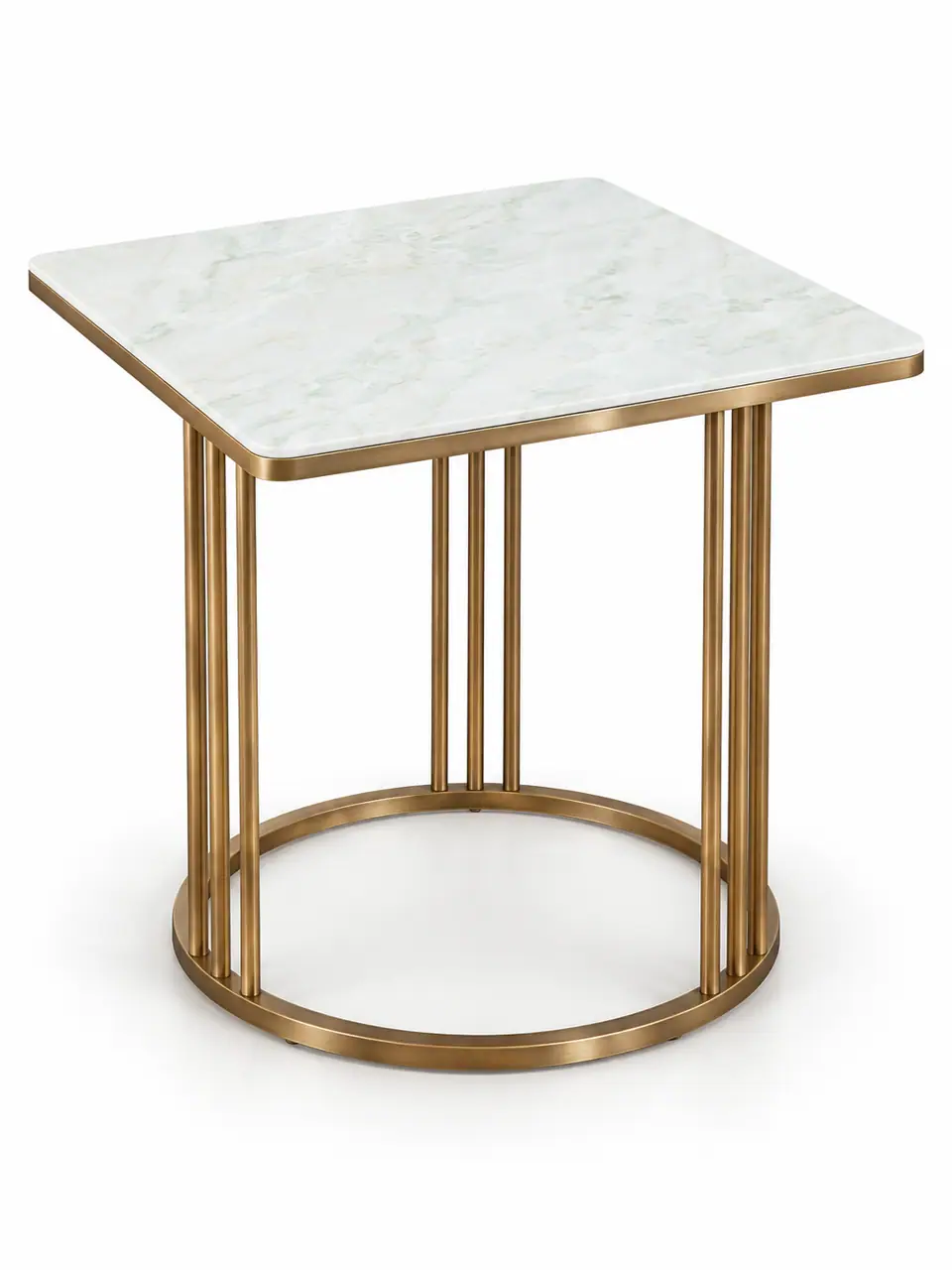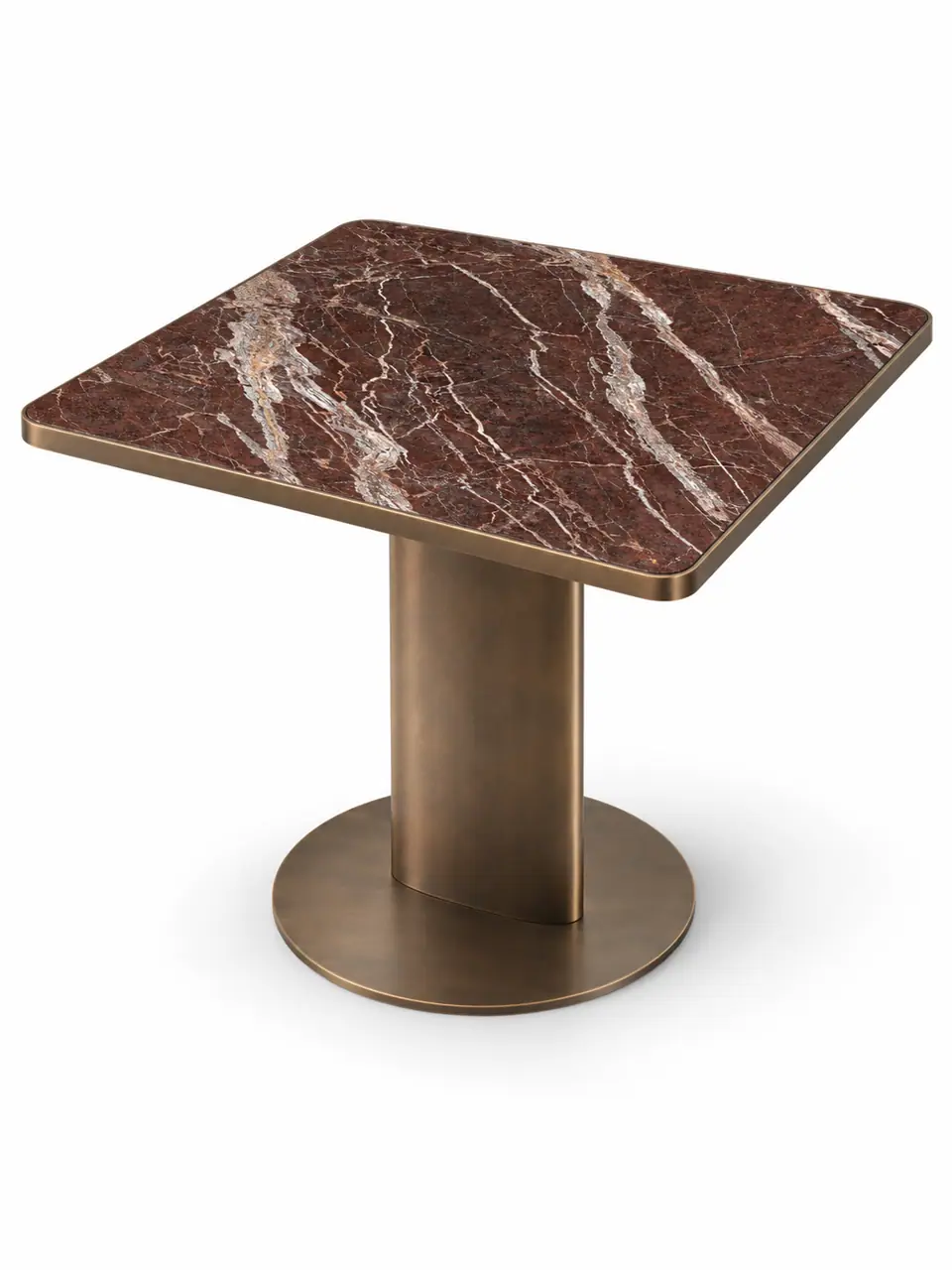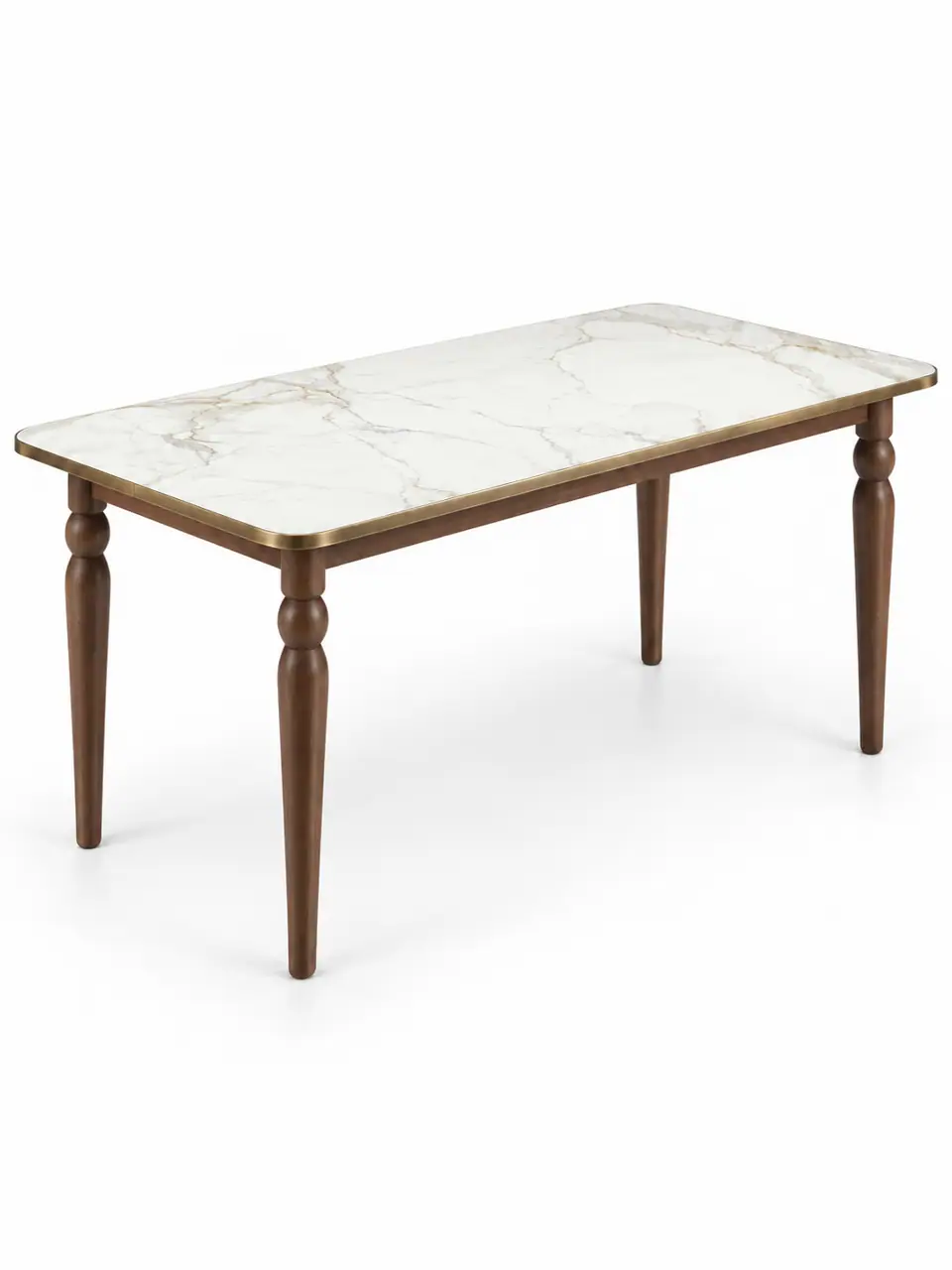
The Bobbin is the traditional table in the range, with a modern top. A white stone look crossed by fine gold and grey veins sits within a fine matte brass edge. Under it, a slim walnut apron joins four turned legs, each with a bobbin swelling above a long taper, in a deep walnut tone.
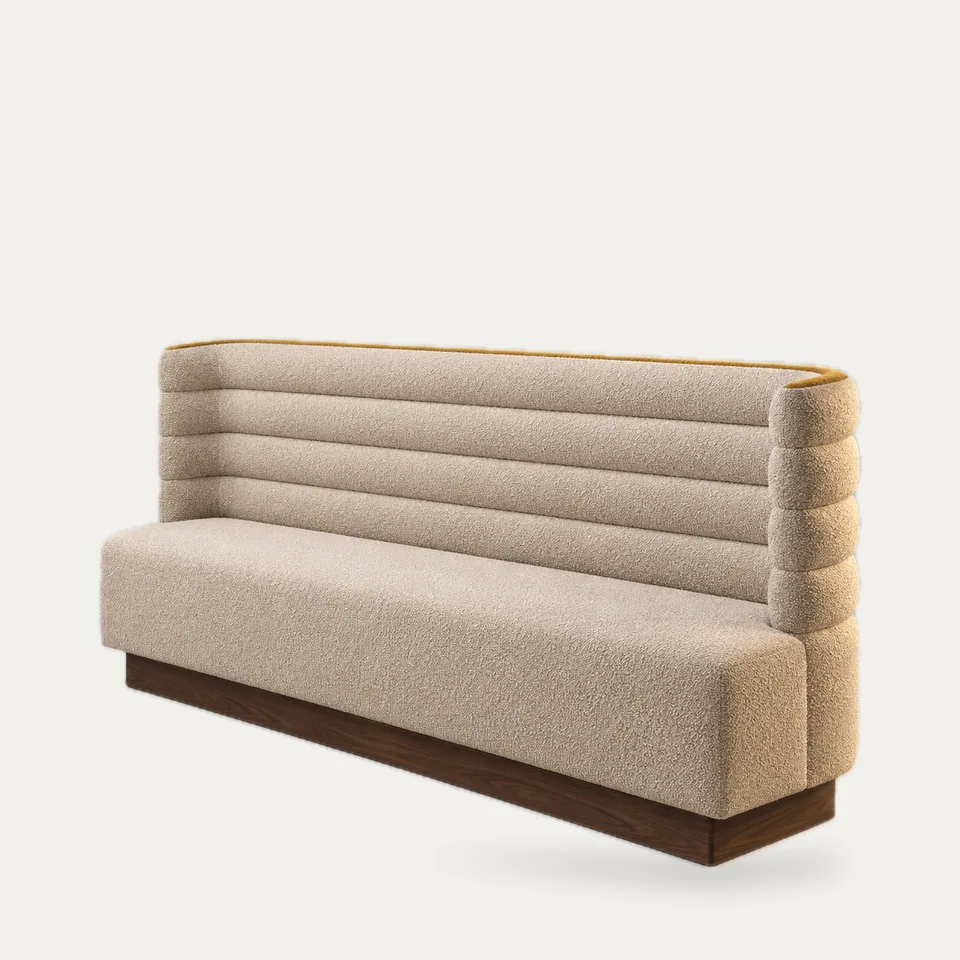
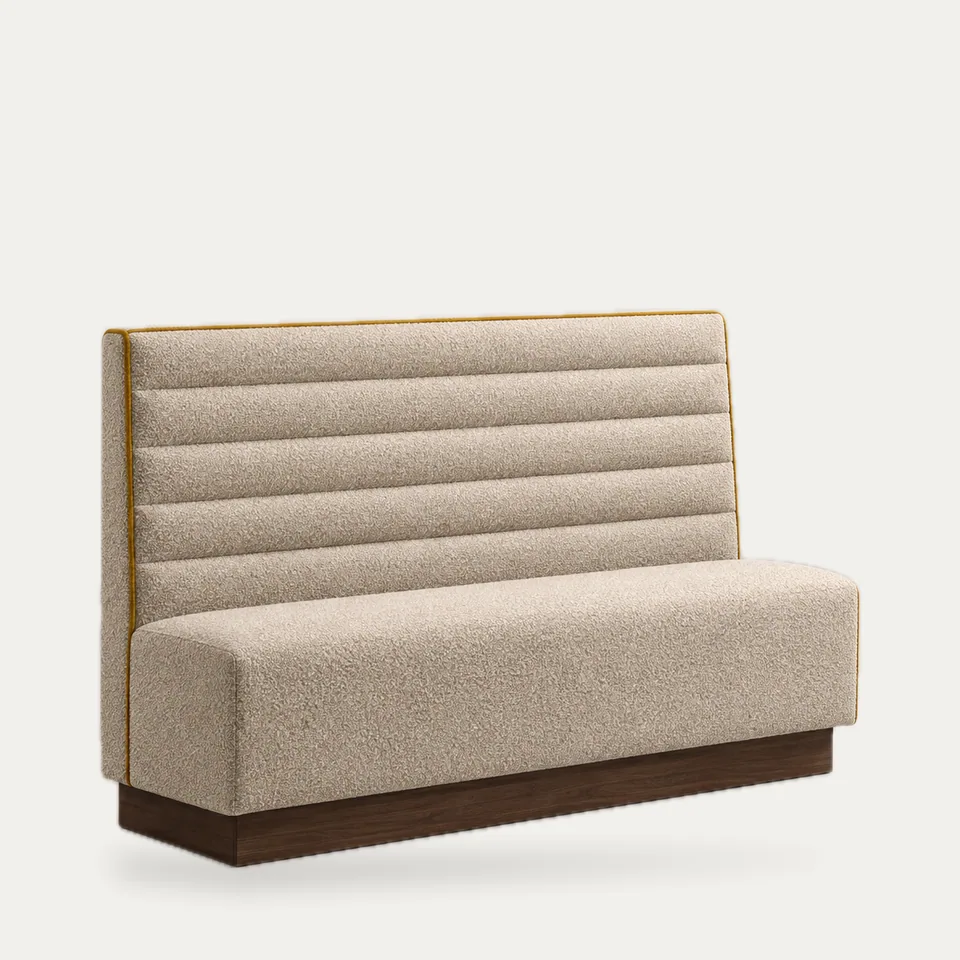
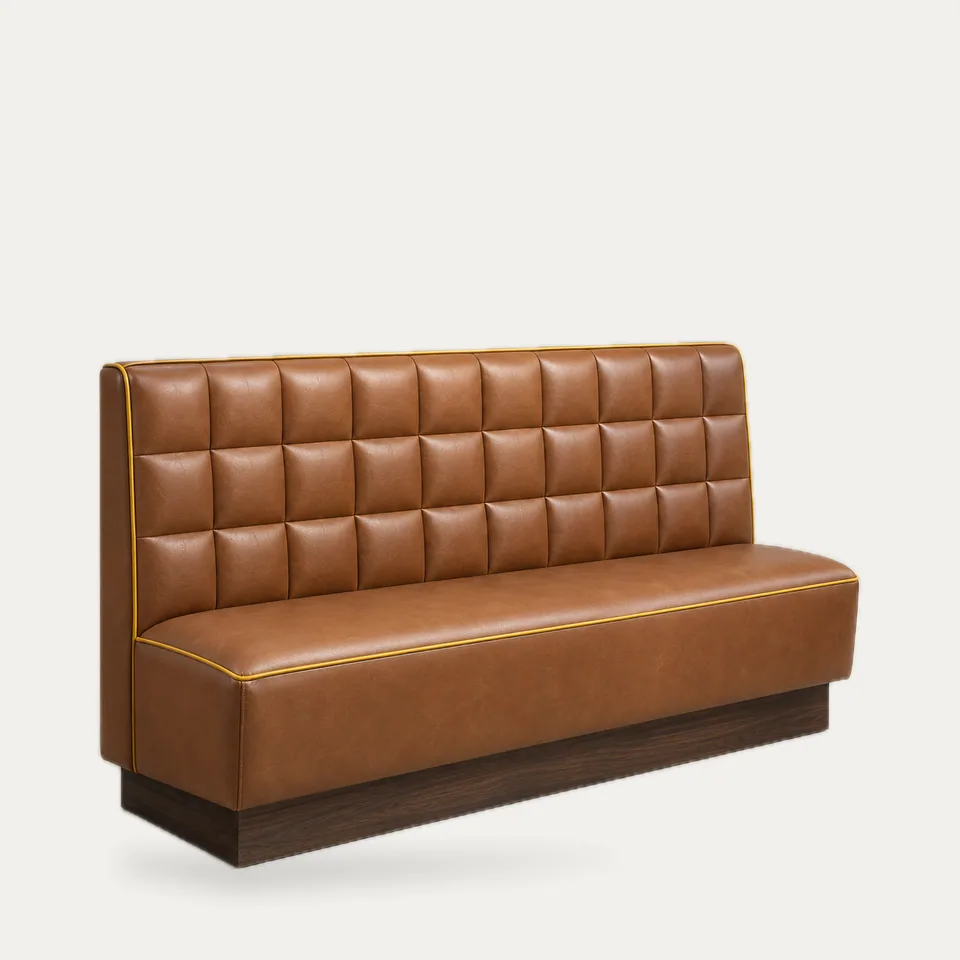
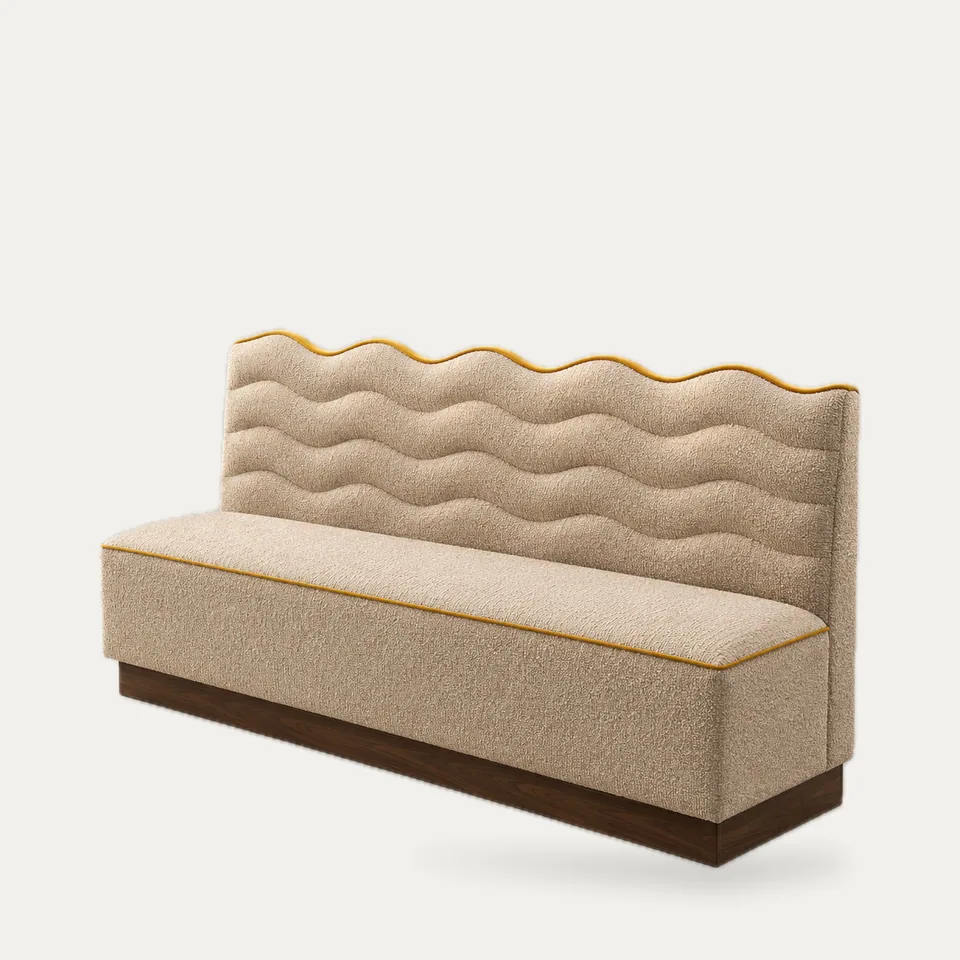
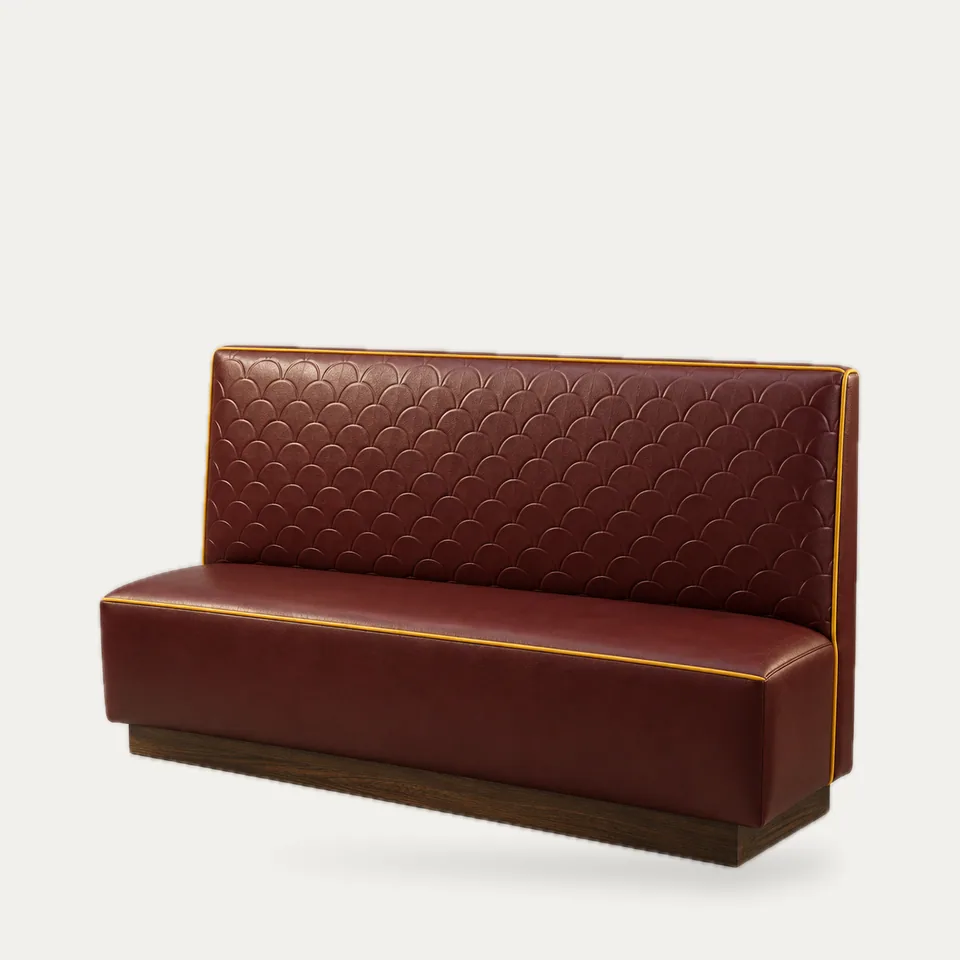
Why turned legs. In a period or Regency-inspired room, a turned leg is the detail guests recognise. Set against a stone top with a brass edge, it looks fresh rather than reproduction, and it echoes the turned feet or fluting that often appear on banquette plinths and caps.
Construction. Solid walnut legs turned in one piece and joined to the apron with mortise-and-tenon joints, glued and pinned; slab bonded to a sub-frame inside the apron; brass edge band fitted flush; felt or nylon glides under the feet. The timber can be finished in a hard-wearing lacquer or a soft oil.
Where it works. Dining rooms with a British, residential feeling, hotel restaurants, private dining rooms and tea rooms. It is also the table to choose where banquettes sit against panelling and the table should feel like furniture rather than equipment.
Placing it. Four legs, set in from the corners, leave seats at the ends clear. Check the chair width against the leg spacing on the drawing.
Options. Other woods and stains, a different leg profile and other stones are available on request.